



Favourites

Account

Basket
VAT:
Ex
Inc


The Renewables team at City Plumbing explains how a major funding boost will change off-grid heating this summer.
If your home uses heating oil or LPG for warmth, you know the financial rollercoaster of keeping your tank full. Off-grid households have faced the brunt of volatile global energy markets for years. To address this challenge, the UK Government is introducing a massive shake-up to its flagship green home incentive: the Boiler Upgrade Scheme (BUS).
Starting July 2026, off-grid homeowners can get a higher grant of £9,000, up from £7,500. You can use it to replace fossil-fuel burners with modern, clean renewable energy sources. Here is what you need to know about this July: how the scheme works, and why now is the best time to future-proof your home energy setup.
What is the Boiler Upgrade Scheme (BUS) for UK Homeowners?
The Boiler Upgrade Scheme is a government-backed initiative in England and Wales designed to help households move away from traditional carbon-intensive boilers. Instead of forcing you to pay the staggering upfront costs of eco-friendly upgrades, the BUS grant immediately strips a massive chunk off the bill.
While urban homeowners on mains gas can claim a generous £7,500 grant, the government is temporarily raising the amount to £9,000 for oil and LPG users. This window opens on 21 July 2026 and runs until 31 March 2027.
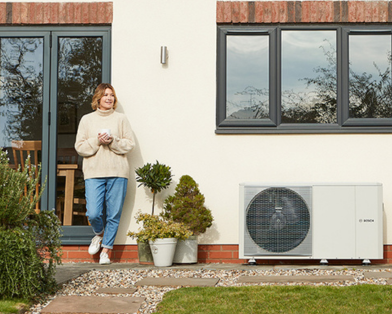
The July 2026 Off-Grid Fuel Uplift: Why the £9,000 Grant Matters
Global energy prices have always been very volatile, and for those living off the gas, exposure to sudden seasonal price spikes has been a constant struggle. This initiative was launched by DESNZ (The Department for Energy Security and Net Zero) specifically to support rural areas.
By raising funding to £9,000, the government lowers the barrier to entry. This lets off-grid properties transition from bulk fuel to efficient, renewable energy with stable, predictable energy costs.
Switching to Renewable Energy: Air Source vs Ground Source Heat Pumps
The £9,000 grant is specifically designated to help you transition to low-carbon, renewable heating systems. The two main clean energy technologies covered by the July uplift are air source and ground source heat pumps:
- Air-Source Heat Pumps function similarly to a reversed refrigerator, taking heat from the outdoor air and increasing its temperature for heating your residence and hot water systems. Such a system is both efficient and fit for outdoor installations in most cases.

- Ground Source Heat Pumps use pipes buried in the ground to capture natural warmth. These systems require more groundwork but are highly efficient and long-lasting.
By choosing renewables, you cut your reliance on fossil fuels. These systems deliver up to three to four times more heat than the electricity they use.
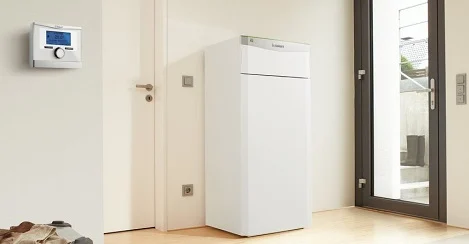
Maximising Efficiency: Pairing Heat Pumps with Home Solar Energy
The £9,000 grant for BUS applies only to the thermal equipment installation. To be fully self-reliant in energy in rural areas, consider your entire property. Because heat pumps operate on electricity, a Solar PV system is crucial here.
By generating solar energy during the day, you can run your heat pump for free much of the year. Adding a solar battery lets you store extra daytime power to run the pump at night. For off-grid homeowners, solar panels plus a heat pump create a self-sustaining renewable energy system that shields your home from UK grid price spikes.

Boiler Upgrade Scheme Eligibility: Does Your Property Qualify?
The criteria for the new £9,000 off-grid grant are as follows. You must meet all requirements to be eligible for the scheme:
- Own a domestic or small non-domestic property located in England or Wales. Note that Scotland has separate funding through Home Energy Scotland.
- Currently, heat your home with an oil, LPG, or direct electric heating system. The scheme excludes properties using mains gas.
- Choose an eligible low-carbon heating system, such as an air-to-water or ground-source heat pump, for your upgrade.
- Have a valid Energy Performance Certificate (EPC) for your property, with no unresolved recommendations for loft or cavity wall insulation at the time of application.
Note: The government recently relaxed the EPC insulation rules. It's now easier for older rural properties to apply. New-build properties and social housing are still mostly excluded from the scheme.
—--------------------------------------------------------------------------------------------------------
How to Apply for the £9,000 BUS Grant via MCS Installers
The best part about the Boiler Upgrade Scheme is simple: you do'nt have to apply yourself. There are no complicated portals or lengthy forms and the entire process is managed directly by your installer:
- Find an MCS-Certified Installer. Your engineer must be accredited by the Microgeneration Certification Scheme (MCS) to access the grant.
- Get a site assessment and quote. The installer will assess heat loss, design the right system, and give you a clear quote.
- The installer applies for the BUS voucher on your behalf. The £9,000 is taken directly off your upfront invoice. You only pay the remaining balance.
The Verdict: Time to Say Goodbye to the Oil Tank?
The £9,000 uplift starts this July. If you wait until then to call, you could end up at the back of a long queue. This grant ends in March 2027, and demand is surging across the UK. MCS-certified installers are set to face a wave of bookings. Get your assessment done now to be ready when the £9,000 funding goes live.
Switching to renewable energy for your home now makes financial and environmental sense. With a £9,000 discount, an air source heat pump is often as affordable, or even cheaper, than a new oil boiler.
Protect your household from future energy price fluctuations, reduce your carbon footprint, and maintain a warm, future-ready home. Contact the Renewables Team at City Plumbing to find out more about how we can help you make the switch to an energy-efficient home with ease.
Help & Feedback
 Chat With Us
 Give Us Feedback