


Favourites

Account

Basket
VAT:
Ex
Inc


Radiators are no longer a standard utility item; they’re now a primary specification for UK homeowners. For the modern installer, staying up to date on the latest shifts in design and output is essential to winning bigger contracts.
At City Plumbing, the home of heating, we understand those in-demand radiator trends, from high-output designer units to space-saving vertical configurations that can help you provide the best technical and aesthetic solutions for your clients each time.
Here, we explore several standout radiator design trends expected to shape 2026, including minimalist flat panels, bold statement colours, and textured finishes.
What Are the Current Aesthetic Trends for Radiators?
1. The Vertical Revolution
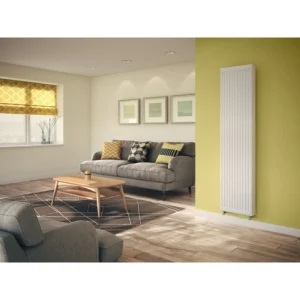
Vertical radiators, like those in our Plumbright and Eucotherm collections dominate modern UK homes, maximising urban space and simplifying furniture layout. Their slim profile frees up valuable floor area.
- Space Optimisation: By utilising "dead" wall space next to doors or in narrow alcoves, you can free up floor space for larger seating or storage.
- Tall, slim radiators (1800mm+) create a striking vertical line, visually extending ceiling height and adding architectural interest.
- Flat-panel radiators like those offered at City Plumbing, deliver a clean, minimalist look that blends seamlessly with walls.
2. Statement Radiator Colours & Colour Drenching
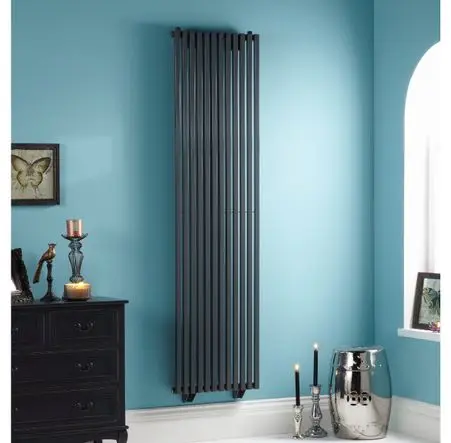
White is no longer the default. Homeowners are now using radiators to anchor a room’s colour palette, choosing to shop radiators by colour, accessing a myriad of colour choices to complement their current decor.
- Beyond Anthracite: While Anthracite remains a bestseller, it’s being joined by Deep Forest Green and Regal Blue colours of the year that align with the 2026 "Rhythm of Blues" trend.
- Colour Drenching: This involves factory-painting radiators in specific RAL colours to match the wall perfectly. The radiator "disappears" into the wall while still providing maximum warmth.
- Matte Finishes: 2026 is the year of the "velvet" finish. Matte surfaces are replacing high-gloss because they absorb light beautifully and hide those pesky fingerprints.
3. The Rise of High-Efficiency Aluminium
With the UK’s shift towards air source heat pumps and lower-temperature heating, the material of your customer’s radiator is now a performance choice, not just a style one.
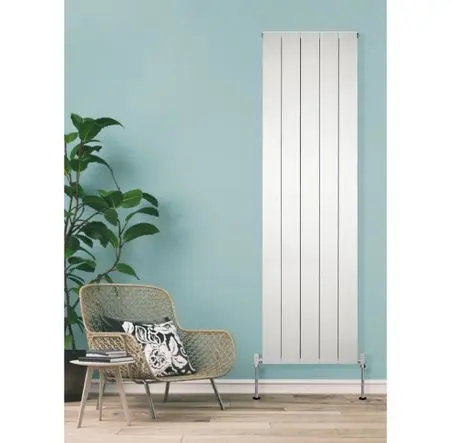
- Superconductors: Aluminium radiators (like those found in the Towelrads range) heat up and cool down faster than traditional steel.
- Eco-Friendly Heating: These units use Low Water Content (LWC), meaning they require less energy to reach peak temperature. Plus, many models are now produced from recycled aluminium, ticking the box for energy-efficient home design.
4. Multi-Purpose & Sculptural Art
Radiators are now pulling double duty as furniture and wall art.
- Smart Bench Radiators: Perfect for boot rooms and entryways, affording a warm place to sit.
- Mirrored Radiators: A "must-have" for dressing rooms, combining a full-length mirror with high-output heating.
- Sculptural Shapes: Designs being treated as functional art installations in open-layout living spaces.
Frequently Asked Questions About Radiators
General Design & Aesthetics
1. What is colour drenching and how can customers do this with radiators?
Colour drenching is the trend of painting an entire room, walls, ceiling, skirting, and radiators, in the exact same shade. This removes visual clutter and makes a room feel larger and more cohesive.
- The Trend: Moving away from white radiators that break up a bold wall.
- How to achieve it: You can order radiators in specific colours to match your customers paint perfectly, or use a high-quality heat-resistant primer to paint a standard unit.
2. Are vertical radiators less efficient than horizontal ones?
Technically, no. If two radiators have the same surface area and material, they will produce the same amount of heat (BTUs).
- The Difference: Vertical radiators distribute heat in a tall "column," while horizontal ones spread it across a wider area.
- Best Use: Verticals are problem solvers and perfect for narrow walls beside doors or in kitchens where you’ve run out of floor space for a traditional unit.
3. What is the "New Neutral" for 2026?
While white is still common, Anthracite (Dark Grey) and Matte Black have become the new standards for modern UK homes. They're favoured because they act as a sophisticated anchor for most colour schemes and hide scuffs and dust better than high-gloss white.
Efficiency & Technology
4. Why is everyone switching to Aluminium radiators?
Aluminium is a superconductor, meaning it responds to the home’s thermostat almost instantly.
- Speed: It heats up and cools down up to 5 times faster than steel.
- Savings: Because they contain less water (Low Water Content), the boiler or heat pump doesn't have to work as hard to reach the desired temperature.
- Installation: They are much lighter than steel, making them safer for internal stud walls.
5. Do I need special radiators for an Air Source Heat Pump?
Yes and no. Heat pumps run at lower temperatures than gas boilers. To keep a room warm, you either need larger radiators or high-efficiency materials like aluminium to maximise the heat transfer from that cooler water.
- Tip: Always use a BTU Calculator before confirming; you may need a "Double Panel" (Type 22) radiator where a single one used to be.
Multi-Purpose & Small Spaces
6. How can I add a radiator to a small hallway or boot room?
The 2026 trend for small spaces is Multi-Purpose Design.
- Bench Radiators: These provide a place to put on shoes while keeping the area warm.
- Mirrored Radiators: A vertical radiator with a full-length mirror panel is a top choice for narrow hallways, as it adds light and heat without taking up two separate wall spots.
7. Can I mix traditional and modern radiator styles in the same house?
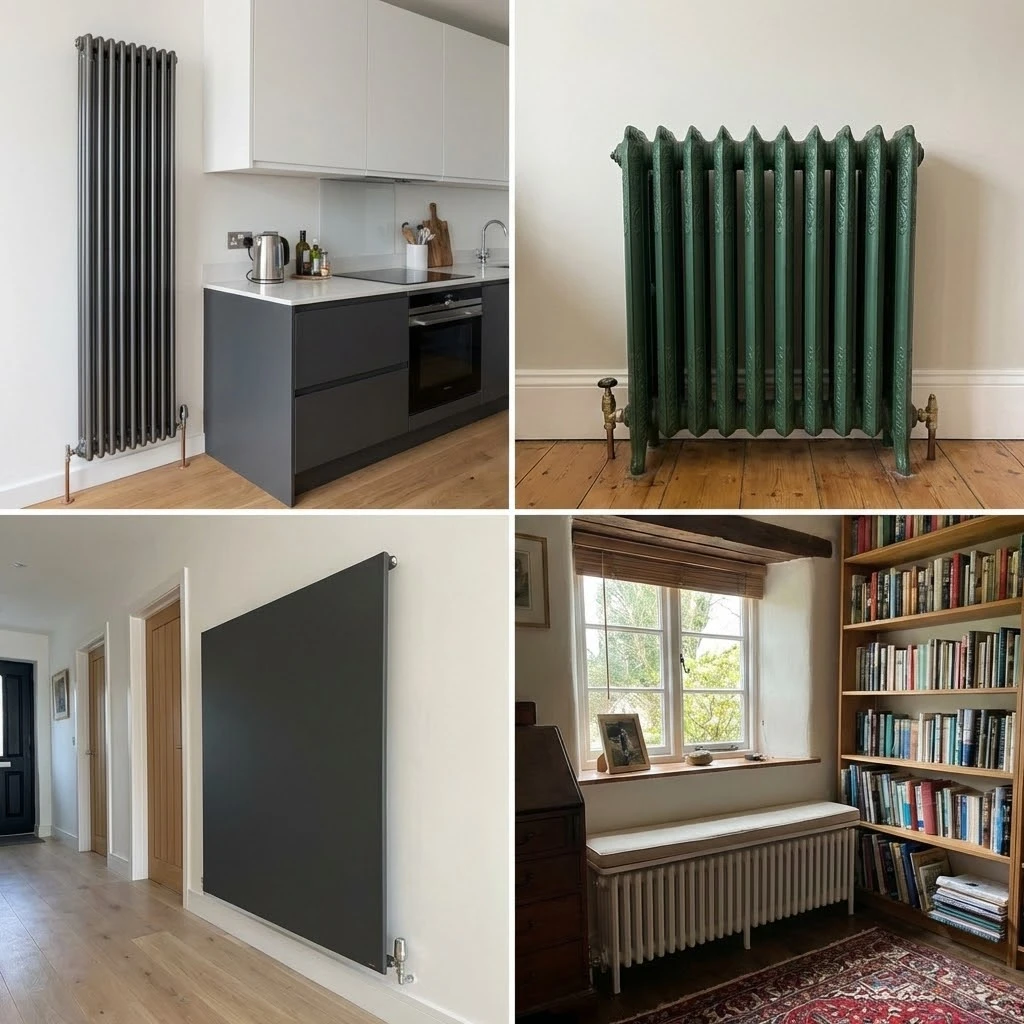
Absolutely. A popular 2026 trend is "Period-Modern Fusion." Homeowners often keep traditional Column Radiators in the living room for a classic feel but switch to sleek Flat Panels or Verticals in modern extensions or kitchens.
Future-Proof Customer Homes with 2026’s Top Radiator Trends
With a clear shift in UK radiator design, more homeowners are moving away from purely functional units toward designer radiators that combine high performance with visual charm. Whether you’re looking to help your customers save space with a vertical radiator, improve their system’s efficiency with aluminium heating, or take on the colour-drenching trend, choosing the right hardware is essential for a modern home.
At City Plumbing, we stock an extensive range of the latest heating units, from sleek minimalist flat panels to statement sculptural pieces. By matching 2026’s aesthetic trends with high-output technology, you can ensure your customers' heating systems are as lovely as they are efficient.
Looking to upgrade your customers' heating? Explore the full range of designer radiators at City Plumbing today. Online or in-store, we stock a fantastic full display of radiators at some of the most competitive prices on the market, helping you find the perfect fit for your next project.
Help & Feedback
 Chat With Us
 Give Us Feedback