



Favourites

Account

Basket
VAT:
Ex
Inc


Understanding Central Heating Systems: How They Work and Why They Matter
Choosing the right central heating system is crucial for maintaining a comfortable and energy-efficient home in the UK. But with so many options available, understanding the basics is key. Central heating systems warm your entire property from a single heat source, offering consistent temperature control, unlike individual heaters. Predominantly, UK homes use wet systems, which rely on water as the heat transfer medium. Let's explore how these systems function and why they are a preferred choice for homeowners.
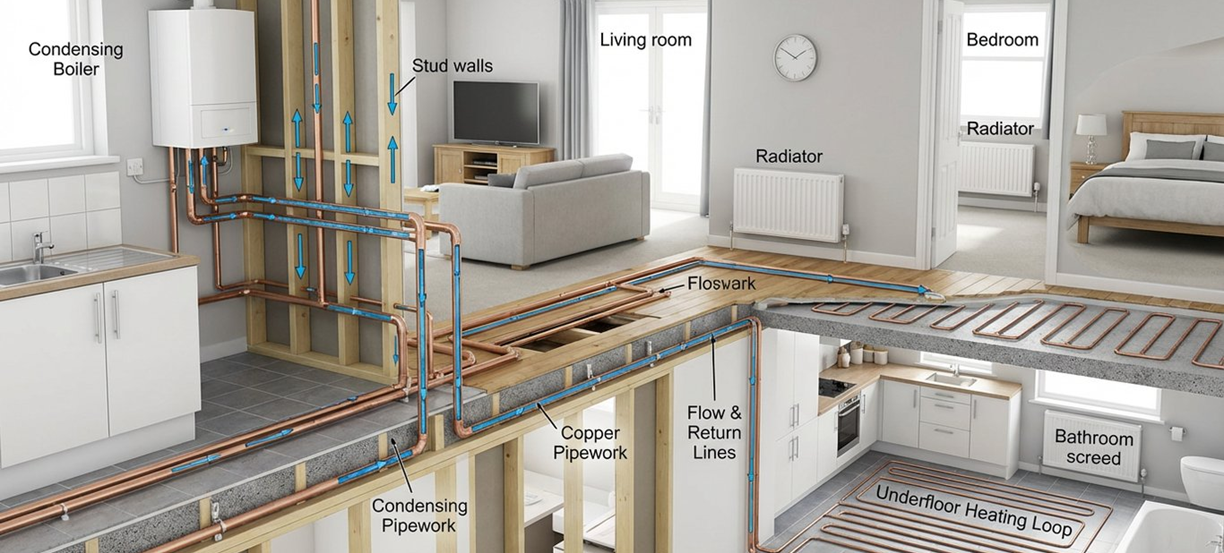
These systems operate through a network of interconnected components:
- Heat Generator: Boilers or heat pumps warm the water.
- Circulation Pump: Ensures continuous water flow.
- Distribution Pipework: Carries heated water throughout the property.
- Heat Emitters: Radiators or underfloor systems release warmth into rooms.
- Thermostat: Monitors and regulates temperature.
- Timers: Schedule heating according to your routine.
Whether you opt for a system with a hot water cylinder or one that provides instant hot water, understanding these principles will help you appreciate how different systems adapt to meet your property's specific needs and energy sources. Now, let's delve into the specifics of boiler-based central heating systems.
Types of Central Heating Boilers (Combi, System & Regular)
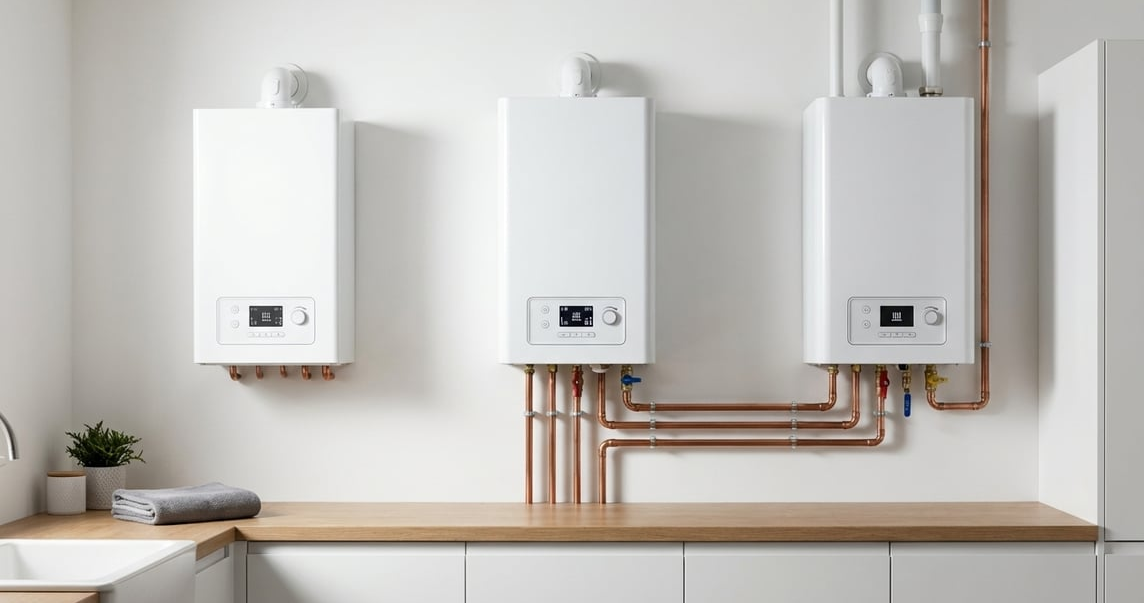
Boiler-based systems remain the backbone of heating in UK homes, offering reliable warmth and hot water through proven technology. These systems burn fuel - whether gas, oil, or use electricity - to heat water that circulates through your property's heating network.
Combination boilers, commonly called combi boilers, have become increasingly popular because they provide both space heating and instant hot water without requiring a storage cylinder. When you turn on a hot tap, the boiler heats water on demand, delivering it at mains pressure for strong flow rates. This makes them ideal for smaller properties or homes where space is at a premium, as they eliminate the need for tanks in lofts or cylinders in airing cupboards. The compact design suits modern living, though simultaneous hot water use at multiple outlets can reduce flow rates.
System boilers work alongside a hot water cylinder, heating water that's stored ready for use whenever you need it. This configuration suits larger households with multiple bathrooms, as several taps or showers can run simultaneously without pressure drops. The cylinder maintains a reserve of hot water, ensuring consistent supply even during peak demand periods. You'll need space for the cylinder, typically in an airing cupboard, but the system eliminates the need for a cold water tank in the loft.
Regular boilers, sometimes called conventional or heat-only boilers, represent the traditional approach found in many older properties. These systems require both a hot water cylinder and a cold water storage tank, typically located in the loft. Whilst they occupy more space than modern alternatives, they work effectively with existing pipework in period properties and can supply multiple outlets with hot water simultaneously. They're often the most practical choice when replacing an existing regular boiler in a property with established infrastructure.
Modern boilers achieve impressive efficiency ratings, with many condensing models reaching 90% or higher. This means they convert the vast majority of fuel into usable heat, minimising waste and reducing running costs. When selecting a central heating boiler, consider your property size, hot water demand, available installation space, and fuel availability. Gas Safe registered engineers must handle all installation and servicing work to ensure safety and regulatory compliance.
As you consider boiler options, remember that heat pump systems offer an energy-efficient alternative. Let's explore how these systems can provide warmth while reducing your carbon footprint.
Ready to upgrade? Browse our complete range of high-efficiency combi and system boilers, or visit your local City Plumbing branch to speak with our heating specialists.
Air Source & Ground Source Heat Pump Systems Explained
Heat pump systems represent a fundamental shift in how we approach home heating, transferring existing warmth rather than generating it through combustion. This distinction makes them remarkably efficient and increasingly attractive as the UK moves toward lower-carbon heating solutions.
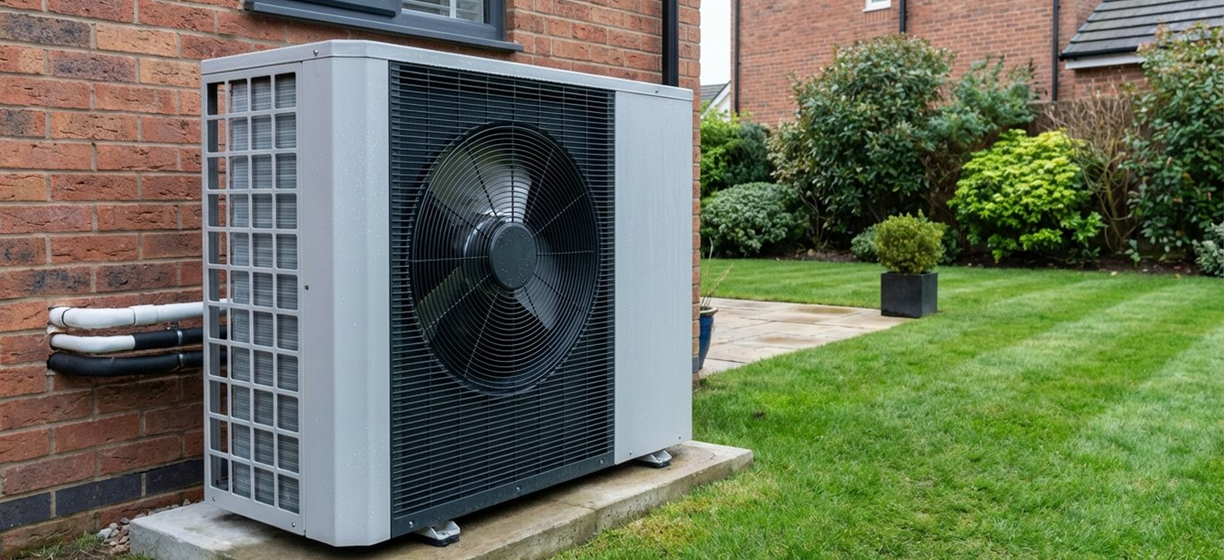
Air source heat pumps extract thermal energy from outdoor air, even when temperatures drop below freezing. The system uses a refrigerant that absorbs heat from the outside air, compresses it to increase the temperature, and then transfers this warmth to your heating system. Despite seeming counterintuitive, these units can extract usable heat from air as cold as -15°C, though their efficiency does decrease as outdoor temperatures fall. The outdoor unit resembles an air conditioning system, whilst indoor components connect to your existing heating distribution network.
Ground source heat pump systems tap into the earth's stable temperature, using pipes buried in your garden to extract warmth. Because ground temperature remains relatively constant throughout the year - typically between 10-15°C - these systems maintain consistent efficiency regardless of weather conditions. The pipes can be laid horizontally in trenches across a large garden area, or vertically in boreholes where space is limited. Installation requires significant groundwork, making them more expensive to install than air source alternatives, but the stable ground temperature delivers reliable performance year-round.
The efficiency of heat pump systems is measured by their coefficient of performance (COP), While COP measures efficiency at a single moment in time, look for the SCOP (Seasonal Coefficient of Performance). SCOP calculates the system’s average efficiency across all four seasons in the UK, providing a more accurate picture of your annual electricity costs. A COP of 3.0 means the system generates three kilowatts of heat for every kilowatt of electricity used. Modern heat pumps typically achieve COPs between 3.0 and 4.0, making them significantly more efficient than electric resistance heating, which has a COP of 1.0. This efficiency advantage translates directly into lower running costs and reduced carbon emissions.
Heat pump systems work most effectively with lower temperature heating systems, such as underfloor heating or oversized radiators, which operate at around 35-45°C rather than the 60-80°C typical of conventional boiler systems. This lower operating temperature allows the heat pump to run more efficiently, though it may require adjustments to your existing heating distribution system. The upfront investment is higher than traditional boilers, but lower running costs and government incentives through schemes like the Boiler Upgrade Scheme can offset this initial expense. Well-insulated properties see the greatest benefit, as the consistent, gentle heat delivery matches the building's ability to retain warmth.
For those seeking renewable alternatives, biomass heating systems offer another compelling option. Let's examine how these systems leverage organic materials to provide warmth.
Biomass Heating Systems: Renewable Alternatives for Off-Grid Homes
Biomass systems offer a renewable heating solution by burning organic materials - primarily wood pellets, logs, or chips - to generate warmth for your home. These systems function similarly to conventional boilers, heating water that circulates through radiators or underfloor heating to warm your property.
The environmental credentials of biomass heating systems stem from the carbon cycle of plant growth. Trees and plants absorb carbon dioxide as they grow, and whilst burning them releases this carbon back into the atmosphere, replanting ensures the cycle continues. This makes biomass heating potentially carbon-neutral when sourced from sustainably managed forests, though the complete picture includes emissions from harvesting, processing, and transportation.
Wood pellet boilers provide the most convenient biomass option, using compressed sawdust pellets that feed automatically from a storage hopper. This automation makes them comparable to conventional boilers in terms of user convenience - you simply ensure the hopper remains filled, and the system handles fuel delivery to the combustion chamber. Log boilers require manual loading but can be more economical if you have access to affordable wood supplies. The choice between pellets and logs often depends on storage space, budget, and how hands-on you want to be with your heating system.
Practical considerations include the need for substantial storage space - both for the boiler itself, which is typically larger than gas alternatives, and for fuel storage. You'll need regular fuel deliveries and space to store several months' worth of pellets or logs, keeping them dry to maintain combustion efficiency. Maintenance requirements are also higher than gas boilers, with ash removal needed weekly or monthly depending on usage, and annual professional servicing to ensure optimal performance and safety. If you live in a town or city, check your local council rules. Many urban areas in the UK are designated Smoke Control Areas, meaning you must install a Defra-exempt biomass boiler and burn authorized smokeless fuels.
Despite these considerations, biomass heating systems can qualify for government renewable heat incentives, helping offset installation costs and making them financially viable for suitable properties, particularly those off the gas grid. They work especially well in rural locations where wood fuel is readily available and where the larger equipment footprint poses fewer space constraints than in urban properties.
Another option for modern comfort is underfloor heating systems. Let's explore how these systems provide warmth directly from the floor, offering a unique and efficient heating solution.
Wet vs. Electric Underfloor Heating Systems
Underfloor heating systems transform your floor into a large, gentle radiator, providing warmth that rises naturally through your living space. This approach creates an even temperature distribution without the cold spots often experienced with wall-mounted radiators, whilst freeing up wall space for furniture and design flexibility.
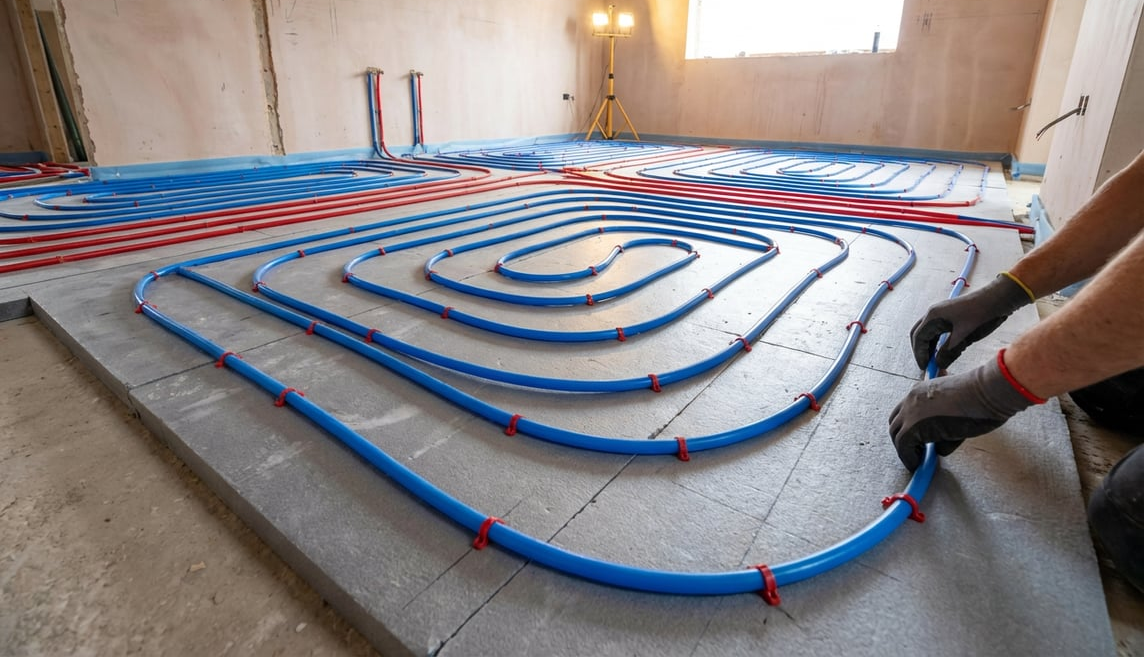
Wet underfloor heating systems circulate warm water through pipes embedded in the floor structure. These pipes connect to your boiler or heat pump, with water temperatures typically between 35-45°C—much lower than traditional radiators. This lower temperature requirement makes wet systems particularly compatible with heat pumps and other renewable technologies. Installation usually happens during construction or major renovation, as the pipes are laid within the floor screed or between joists. The thermal mass of the floor means these systems respond slowly to temperature changes, making them ideal for maintaining steady background warmth rather than rapid heating. Once the floor reaches operating temperature, it radiates heat consistently and efficiently.
Electric underfloor heating systems use heating cables or mats installed beneath floor finishes. These systems are thinner than wet alternatives and easier to retrofit in existing properties, making them popular for bathroom renovations or conservatory additions. They heat up more quickly than wet systems, allowing for responsive temperature control, though running costs are typically higher due to electricity prices. Electric systems work well for smaller areas or rooms used intermittently, where you want quick warmth without heating the entire property. The installation process is less disruptive than wet systems, often requiring only minor floor height adjustments.
Compared to radiator heating systems, underfloor heating systems operate at lower temperatures whilst covering a larger surface area, resulting in more efficient heat distribution. The gentle, radiant warmth feels comfortable at lower air temperatures, potentially reducing energy consumption. Floor coverings affect performance—stone and tile conduct heat excellently, whilst thick carpets and underlay can insulate against heat transfer, reducing efficiency. When planning underfloor heating systems, consider your flooring choices carefully to maximise system performance and comfort.
For properties off the gas grid, oil heating systems provide a reliable alternative. Let's delve into the specifics of these systems and their operational considerations.
Oil Heating Systems & Storage Tanks for Rural Properties
Properties beyond the reach of mains gas networks often rely on oil-fired heating systems, which provide reliable warmth and hot water using kerosene stored in an on-site tank. These systems operate on similar principles to gas boilers, burning fuel to heat water that circulates through your heating system.
The key requirement is a storage tank, typically holding 1,200 to 2,500 litres of heating oil. Tank placement requires careful consideration - it must be accessible for delivery tankers, positioned on a stable base, and comply with regulations regarding distance from buildings and boundaries. Modern tanks incorporate security features and bunding (double-skinned construction) to prevent leaks and environmental contamination. You'll need to monitor fuel levels and arrange deliveries before running low, particularly during winter when demand peaks.
Oil heating systems have evolved significantly, with modern condensing models achieving efficiency ratings comparable to gas equivalents. However, oil prices fluctuate more than gas, and you'll need to monitor tank levels and arrange deliveries, typically ordering in bulk when prices are favourable. Running costs generally exceed mains gas but remain competitive with electricity and LPG, making oil a practical choice for rural properties. Some homeowners join oil buying clubs to secure better prices through collective purchasing.
Maintenance requirements include annual servicing by an OFTEC-registered technician, periodic tank inspections, and occasional filter changes. The fuel itself requires no special handling, though you should monitor for water contamination, which can occur through condensation in partially filled tanks. Despite these considerations, oil heating systems provide dependable warmth for the estimated 1.5 million UK homes without gas connections, particularly when combined with good insulation and efficient controls.
For homes without gas connections, electric heating options offer versatile solutions. Let's explore these systems and how they can provide efficient and flexible heating.
Electric Heating Options, Radiators & Storage Heaters
Electric heating provides versatile solutions for properties where gas connections aren't available or practical. These systems, including electric boilers, convert electricity directly into heat, eliminating the need for water circulation and offering flexible installation options.
Storage heaters capitalise on off-peak electricity tariffs by storing heat overnight when rates are lower, then releasing it gradually throughout the day. Modern storage heaters feature improved controls and insulation compared to older models, allowing better heat retention and more responsive output adjustment. They work by heating ceramic bricks or similar materials during off-peak periods, with the stored thermal energy radiating into your room over the following hours. Whilst this approach reduces running costs, it requires planning - you must predict tomorrow's heating needs today when setting the charge level. Newer models with adaptive controls learn your patterns and adjust automatically, improving convenience.
Electric radiators offer more immediate control, heating rooms on demand without requiring overnight charging. These units contain thermodynamic fluid that heats rapidly when electricity flows through internal elements. They provide both convected warmth (heating air) and radiant heat (warming objects and people directly), creating comfortable conditions efficiently. Individual room control means you only heat occupied spaces, potentially reducing waste compared to whole-house systems. However, electricity costs per kilowatt-hour exceed gas prices, making running costs higher unless you have access to renewable electricity generation or favourable tariffs.
Warm air systems, less common in modern installations, heat air centrally and distribute it through ducting to various rooms. These systems were popular in the 1960s and 70s but have largely been superseded by wet systems. Where they exist, they provide rapid heating response and can incorporate air filtration, though they may create noise and air movement that some occupants find uncomfortable. Maintenance involves regular filter changes and duct cleaning to maintain air quality and system efficiency.
With a variety of heating solutions for homes available, making the right choice for your home requires careful consideration. Let's explore the key factors to consider when selecting the ideal heating system for your needs.
How to Choose the Right Central Heating System for Your Property
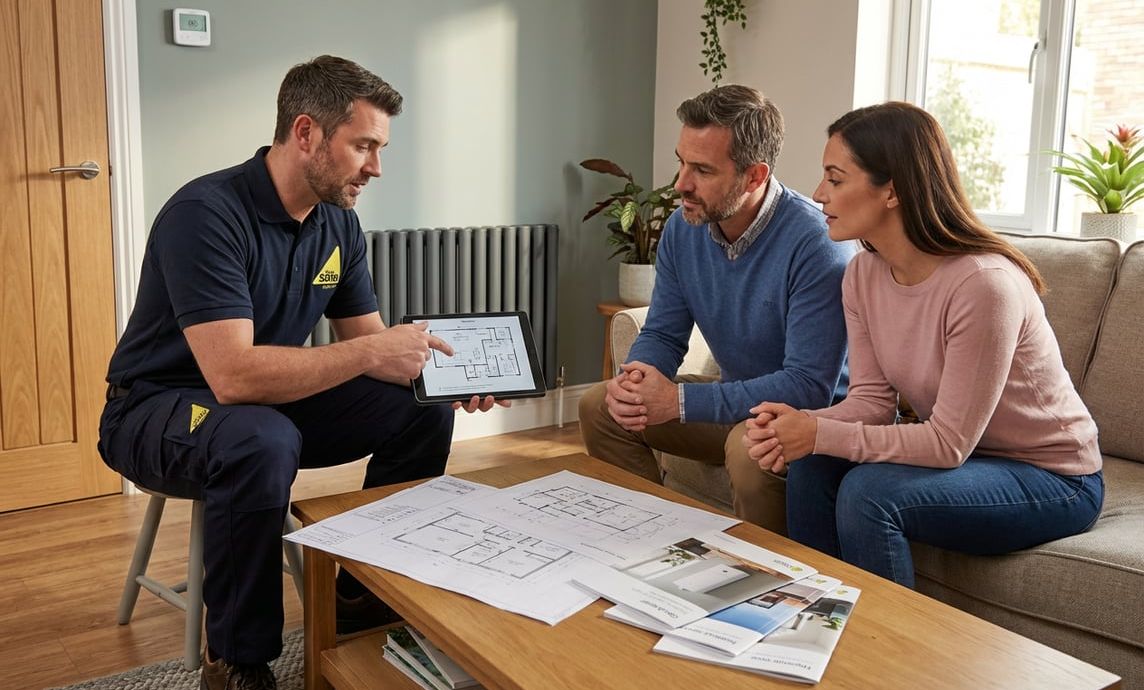
Professional heating engineer consulting with homeowners about the best heating system for their property
Selecting an appropriate heating system requires balancing multiple factors specific to your property and circumstances. The decision extends beyond initial costs to encompass long-term running expenses, maintenance requirements, and how well the system matches your lifestyle and property characteristics.
Property age and construction significantly influence which systems work best. Older buildings with solid walls and limited insulation may struggle to achieve comfort with lower-temperature systems like heat pump systems unless you first improve thermal performance. These properties might benefit from higher-temperature systems or a phased approach - improving insulation before transitioning to more efficient heating technologies. Conversely, modern well-insulated homes can operate comfortably with heat pump systems or underfloor heating systems running at lower temperatures, maximising efficiency. The building's thermal envelope determines how much heat you need to generate and how effectively different systems can maintain comfort.
Your hot water requirements shape system selection considerably. Large households with multiple bathrooms benefit from systems with stored hot water capacity—system boilers with cylinders, or heat pump systems with larger hot water tanks. Smaller households or properties with limited space might prefer combination boilers that provide instant hot water without storage requirements, though this limits simultaneous hot water use at multiple outlets. Consider your peak demand periods - do multiple family members shower in quick succession each morning? This usage pattern favours stored hot water systems.
Fuel availability and costs vary significantly across the UK. Properties with mains gas access typically find gas boilers offer the most economical running costs, though heat pump systems are becoming increasingly competitive, especially with government incentives. Rural properties might choose between oil, LPG, biomass, or heat pump systems, with the optimal choice depending on fuel delivery logistics, storage space, and long-term price projections. Consider not just current costs but likely future trends - carbon taxes and renewable energy incentives are shifting the economic landscape toward lower-carbon alternatives.
Installation space and disruption matter practically. Combination boilers require minimal space and no hot water cylinder, making them suitable for compact properties. Heat pump systems need outdoor space for the unit and potentially larger radiators or underfloor heating systems for optimal performance. Biomass heating systems demand substantial storage for fuel and a larger boiler, whilst oil heating systems require tank placement with delivery access. Assess your available space realistically before committing to a system that might prove impractical to accommodate.
Running costs extend beyond fuel prices to include maintenance, servicing, and system longevity. Gas boilers require annual servicing, heat pump systems need periodic refrigerant checks, and biomass heating systems involve regular ash removal and more frequent maintenance. Factor these ongoing commitments into your decision alongside headline efficiency figures. A system with lower fuel costs but higher maintenance requirements might not deliver the savings you expect.
Environmental considerations increasingly influence heating choices. Heat pump systems and biomass heating systems offer lower carbon emissions than fossil fuel alternatives, particularly when powered by renewable electricity. Government schemes like the Boiler Upgrade Scheme provide grants for low-carbon heating installation, improving the financial case for these technologies. If reducing your carbon footprint matters to you, these incentives can make renewable options more accessible whilst contributing to national decarbonisation targets.
Ultimately, the most economical and effective system balances upfront investment, running costs, maintenance requirements, and compatibility with your property's characteristics. Consulting with qualified heating engineers who can assess your specific situation—considering insulation levels, existing infrastructure, and usage patterns—helps ensure you select a system that delivers reliable comfort efficiently for years to come. Request multiple quotes and ask detailed questions about performance expectations, warranty coverage, and realistic running costs based on properties similar to yours.
Making Informed Heating Decisions
Selecting the right central heating system involves carefully weighing various factors, from property specifics to long-term costs. Prioritising energy efficiency, consider heat pump systems or biomass heating systems, especially with available government incentives. Assess your property's insulation and hot water demands to ensure optimal system performance. By consulting with qualified heating engineers and thoroughly evaluating your options, you can make an informed decision that provides reliable comfort and reduces your environmental impact for years to come. Taking these steps ensures a warm, efficient, and sustainable home heating solution.
Help & Feedback
 Chat With Us
 Give Us Feedback