



Favourites

Account

Basket
VAT:
Ex
Inc


 45 years of trusted expertise
With winter fast approaching in the UK, the annual challenge of keeping our homes warm without breaking the bank begins! And, with energy prices constantly under the spotlight, for many of us, the need to stay warm for less this season has never been greater.
At City Plumbing, the home of heating, we know that an efficient, cosy home doesn't always require a costly overhaul. It often involves a combination of quick, low-cost actions and the strategic use of your existing central heating system.
Here we offer some of the most helpful home heating and energy-saving tips. Divided into easy categories, by adopting these tips, you can often significantly reduce your heating bill while keeping your home comfortable this winter.
Heating System Control and Optimisation
These tips focus on making your existing heating system run more efficiently and cost-effectively.
- Turn Down the Thermostat: Reduce your main thermostat by just one degree. Most UK energy experts recommend setting the thermostat to the lowest comfortable temperature, typically between 18°C and 21°C. Lowering it by one degree can save you a significant amount on your annual bill (some sources suggest up to 10%).
- Adjust Boiler Flow Temperature (Combi Boilers): If you have a combi boiler, reducing the "flow" temperature (the temp of the water going to your radiators) to between 55°C and 60°C can significantly improve its efficiency. This is a common, small tweak that can reduce gas usage without significantly lowering the temperature in your home, although rooms may take slightly longer to warm up.
Use Heating Controls Smartly:
- Set your heating to come on 30 minutes before you need it and switch off 30 minutes before you leave or go to bed (making use of residual heat).
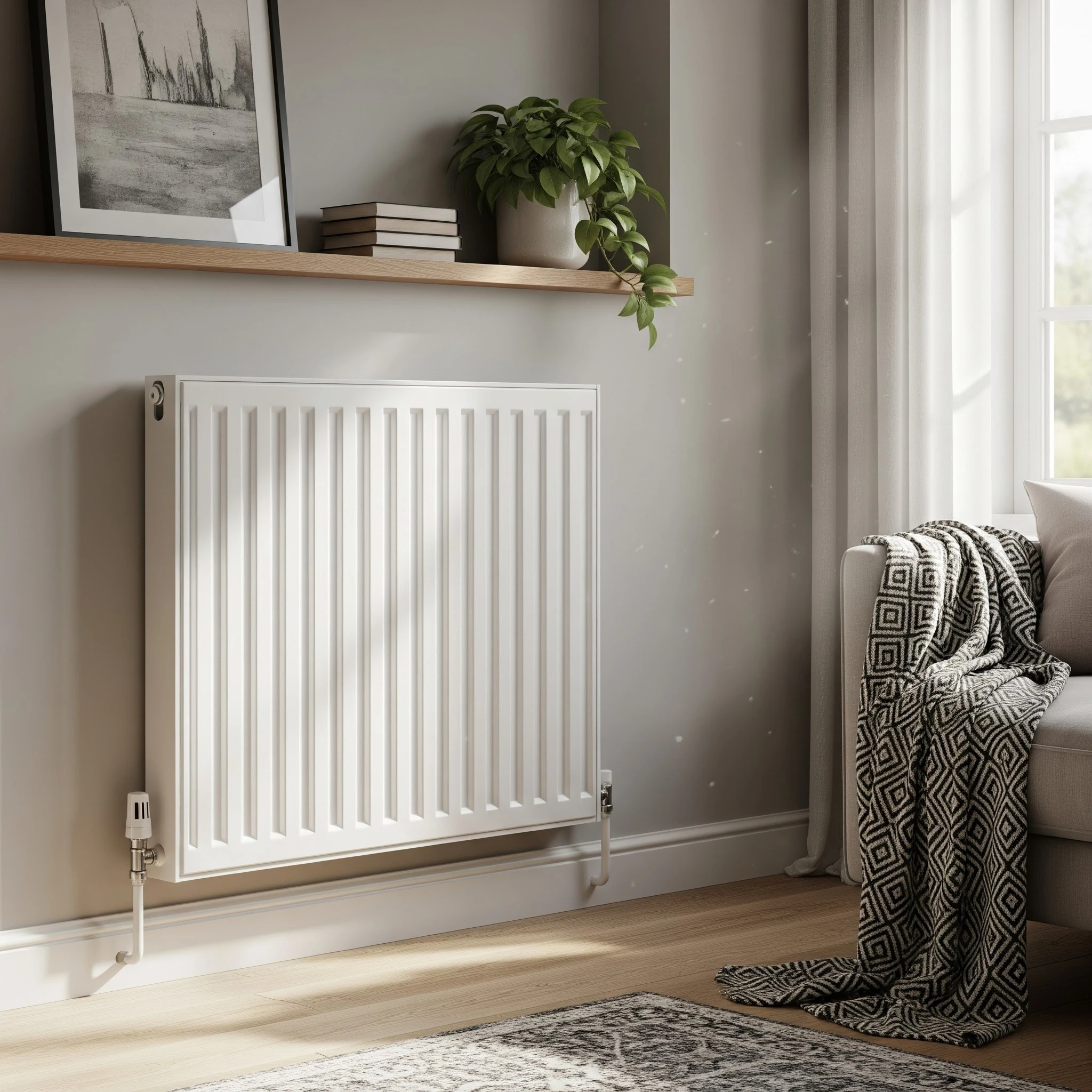
- Use Thermostatic Radiator Valves (TRVs) to turn down or switch off radiators in rooms you rarely use (like spare bedrooms).
- Bleed Your Radiators: If your radiators are cold at the top and warm at the bottom, trapped air is preventing hot water from circulating fully. Bleed them using a radiator key to release the air and restore full efficiency.
- Do Not Cover Radiators: Ensure that sofas, curtains, or clothes drying on a line do not block radiators. This absorbs the heat and stops it from circulating into the room.

Stop Heat From Escaping (Draught-Proofing)
Approximately 18% of a home's heat loss occurs through windows, and 3% through doors. Tackling draughts is one of the cheapest ways to save energy.
Draught-Proof Doors and Windows:
- Use self-adhesive foam strips around windows and door frames to create a seal.
- Fit brush or hinged flaps over letterboxes and keyhole covers.
- Use draught excluders (such as sausage dogs or rolled-up towels) at the bottom of external and unused internal doors.
Close Chimneys:
- If you have an open fireplace that isn't being used, install a chimney balloon or draught excluder to stop warm air from rushing up the flue (a significant source of heat loss).
Cover Windows at Night:
- Close curtains and blinds as soon as it gets dark to trap a layer of heat between the glass and the room. Thermal-lined curtains are even more effective.
- Seal Floorboards: Use a specialised sealant or flexible filler to plug gaps between exposed floorboards.

Home Improvements and Insulation
These require a bit more effort or initial cost but offer greater, long-term savings.
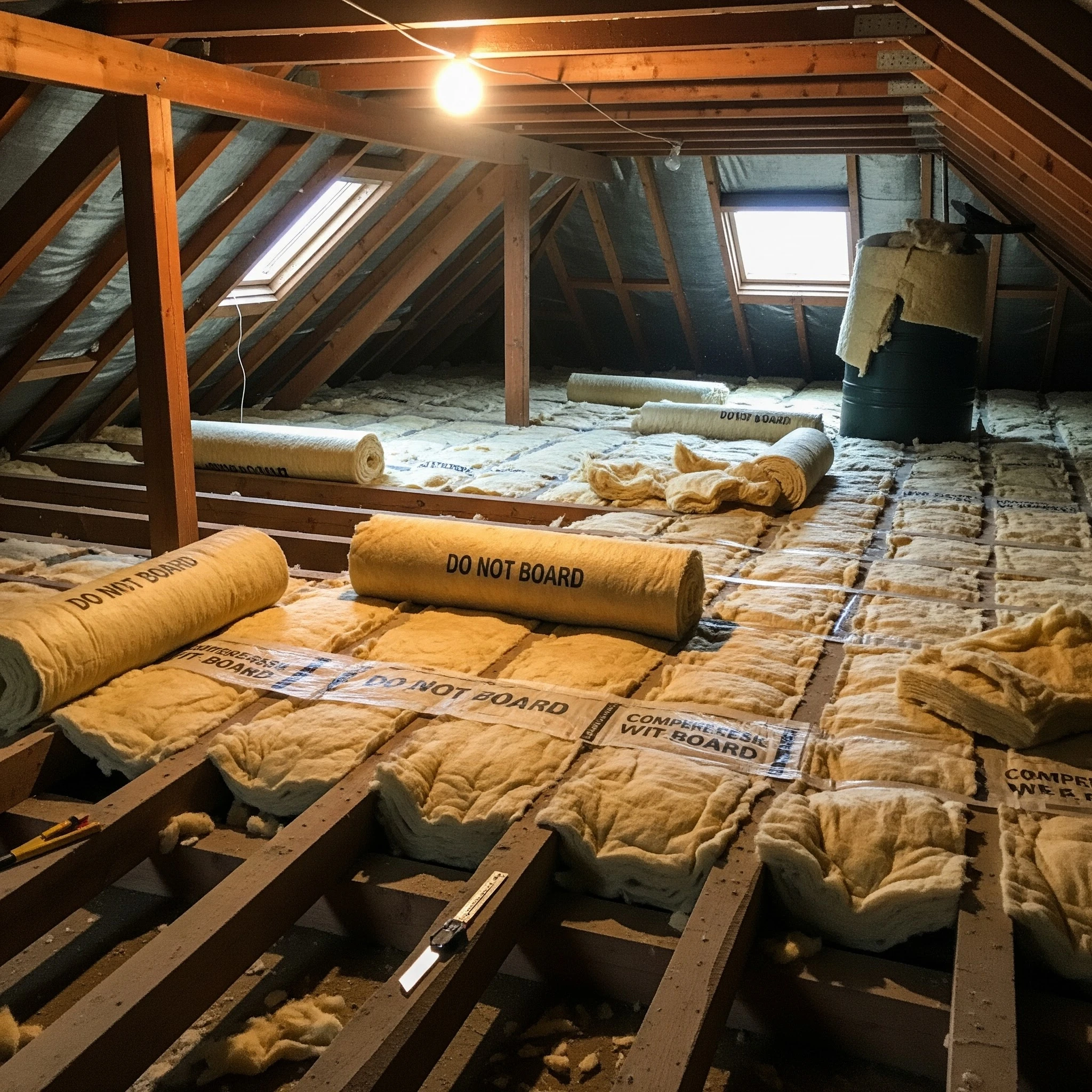
- Insulate Your Loft: The recommended depth for loft insulation in the UK is 270mm. If your loft isn't insulated or needs topping up, this is one of the most effective ways to prevent heat loss through the roof.
- Insulate Hot Water Pipes and Tank:
- Cover exposed hot water pipes (especially those in your loft or basement) with foam pipe lagging to keep the water hotter for longer and prevent pipes from freezing.
- Ensure your hot water cylinder (if you have one) has a thick insulation jacket (80mm is recommended).
- Install Radiator Reflector Panels: Place thin foil panels behind radiators mounted on external walls. These reflect heat that would otherwise be lost into the wall back into the room.
- Annual Boiler Service: Have a Gas Safe registered engineer service your boiler annually. A well-maintained boiler runs more efficiently and is less likely to break down when you need it most.
Home Improvement & Upgrade Schemes
The UK government and energy suppliers offer several schemes to help households reduce their heating bills through upgrades and direct financial support. Here is an overview of the key schemes currently available or planned for the immediate future. These schemes focus on installing insulation, heat pumps, or improving heating systems to make your home more energy efficient.
- What it is: A government scheme in England and Wales providing grants to encourage property owners to replace old fossil fuel heating systems with low-carbon alternatives.
- What you get:
- £7,500 off the cost and installation of an Air Source or Ground Source Heat Pump.
- £5,000 off the cost and installation of a Biomass Boiler (for rural, off-gas properties only).
- Eligibility: Must be replacing an existing fossil fuel system (gas, oil, or electric heating). The application is made by your certified installer, who then discounts the grant value from your invoice.
- Status: Open until December 2027.
- What it is: An obligation on energy companies to provide funding for energy-saving measures to vulnerable, low-income households and those with low energy-efficiency ratings. It’s not a grant but a mechanism for companies to deliver funding.
- What you get: Free energy efficiency upgrades, which can include insulation (cavity wall, loft, etc.), first-time central heating, and in some cases, boiler replacement or renewable heating.
- Eligibility: Generally for households receiving certain means-tested benefits and living in properties with a low Energy Performance Certificate (EPC) rating (typically D, E, F, or G).
- How to apply: Contact an approved ECO installer or one of the obligated energy suppliers (you don't need to be their customer).
- Status: Running until March 2026.
- What it is: A government scheme designed to help a wider range of households (beyond the ECO scheme) to insulate their homes and reduce bills.
- What you get: Funding for one insulation measure, usually loft or cavity wall insulation.
- Eligibility: Divided into two groups:
- Low-Income Group: Households receiving certain benefits.
- General Group: Households with properties that have an EPC rating of D-G and are in Council Tax Band A–D in England (or A–E in Scotland/Wales).
- How to apply: Check eligibility online via the government website or contact an energy supplier participating in the scheme.
- Status: Running until March 2026.
Direct Financial Assistance
These schemes provide direct payments or discounts on energy bills to vulnerable groups during the winter months.
- What it is: A government scheme providing a one-off discount on your electricity bill.
- What you get: A £150 discount applied to your electricity bill between October and March.
- Eligibility (England & Wales): The majority of people are now identified automatically and no longer need to apply. It is generally given to:
- Core Group 1: Those who receive the Guarantee Credit element of Pension Credit.
- Core Group 2: Those on a low income who receive certain means-tested benefits.
- Action: If you are eligible in England or Wales, you will typically receive a letter from the government between October and December 2025.
- Status: Available for winter 2025/2026.
- What it is: An annual payment to help pensioners pay for their heating.
- What you get: Between £250 and £600 (including a Pensioner Cost of Living Payment), depending on your age and circumstances.
- Eligibility: Generally for people born on or before a specified date (usually before 26 September 1959 for winter 2025/2026) who live in the UK.
- Action: Usually paid automatically if you receive the State Pension or other social security benefits.
How to Apply For Energy Saving Help This Winter
The schemes are delivered by energy companies and approved installers, not the government directly.
- Check your EPC and Council Tax Band. You'll need these to confirm eligibility.
- Contact an obligated energy supplier (it doesn't have to be your current supplier) or an approved installer to see what you qualify for under GBIS or ECO4.
- For the Warm Homes: Local Grant, you need to apply through your local council.
- For the Boiler Upgrade Scheme, your installer applies for the grant on your behalf.
We strongly recommend using the government's online tools to check your specific eligibility for the insulation and boiler schemes. These will provide the most relevant and up-to-date key details and eligibility for the main UK government-backed schemes that offer assistance for home energy improvements.
Choose City Plumbing This Winter For All Your Heating Needs
Keeping your home warm efficiently during the winter involves a combination of smart habits, simple household fixes, and knowing how to utilise your heating system to its full potential. From that quick bleed of a radiator to securing a government grant for a major insulation upgrade, every action you take contributes to a more comfortable and cost-effective home.
At City Plumbing we’re dedicated to supplying the products and knowledge you need to achieve this. By implementing these tips, you're not just tackling the cold but securing a more efficient, future-proof home.
If you’re looking for helpful advice and suggestions on the best ways to keep your home warm and on budget this winter, take a further look at the City Plumbing website for more information.