



Favourites

Account

Basket
VAT:
Ex
Inc


Limescale is the silent enemy of efficiency and lifespan in hard-water areas, building up inside boilers, pipes, and appliances, dramatically increasing energy bills and leading to costly repairs. For UK homeowners and installers facing this pervasive issue, choosing a scale reducer is a crucial decision.
Here at City Plumbing, we provide a helpful guide on water hardness while comparing the two most common and compliant "fit and forget" solutions: the Electrolytic Scale Reducer (ESR) and the Magnetic Scale Reducer (MSR), so you can confidently select the right Plumbright product to safeguard your home and budget this season.
Understand Your Home’s Unique Requirements
Choosing the right limescale reducer for a UK home involves understanding your water hardness, your budget, and what exactly you want to protect. Here is a step-by-step guide on how to make the best choice:
1. Determine Your Water Hardness
The level of calcium and magnesium in your supply is the single biggest factor.
- Check Your Postcode: Use your local water company's website (e.g. Thames Water, Severn Trent) or an online UK hard water map to check the hardness level, usually measured in parts per million (ppm) of calcium carbonate CaCO 3.
- UK Classification: Water is typically classified as 'Hard' if it contains over 200 ppm of dissolved solids. Most of South-East England, including London, is in a hard water area.
CaCO 3 Concentration and Water Classification
The level of CaCO 3 (calcium carbonate) in your water dictates the required level of scale prevention:
- Less than 100 ppm CaCO 3: This water is classified as Soft. Minimal scale prevention is needed.
- 100-200 ppm CaCO 3: This water is classified as Moderately Hard. A basic scale reducer is usually sufficient.
- Greater than 200 ppm CaCO 3: This water is classified as Hard to Very Hard. A high-performance ESR (Electrolytic Scale Reducer) or a traditional water softener is highly recommended.
2. Decide on Your Protection Goal: Inhibitor vs. Softener
You need to decide whether you want to treat the water or just inhibit the scale.
Scale Inhibitor/Reducer ESR - The "Fit and Forget" Option
- How It Works: Changes calcium carbonate’s structure so it doesn’t stick to hot surfaces, such as a boiler’s heat exchanger.
- Key Benefit: Meets Building Regulations (Part L) and protects appliances while retaining beneficial minerals in the water.
- Cost & Maintenance: Lower upfront cost; simple "fit-and-forget" installation with minimal maintenance.
Traditional Water Softener - The Total Removal Option
- How It Works: Uses a salt-based process to remove calcium and magnesium from water.
- Key Benefit: Removes the scale problem entirely, providing full soft water benefits (e.g., better lather, less cleaning, softer skin/hair).
- Cost & Maintenance: Higher upfront cost; requires salt top-ups and a separate unsoftened drinking water tap.
3. Choose the Right Scale Reducer Type (ESR vs. MSR)
If you decide on a simple scale reducer, the choice between Electrolytic and Magnetic is based on the scope and consistency of protection.
Electrolytic Scale Reducer ESR
- Scope: Whole House Protection.
- Location: Fitted on the incoming cold mains to protect the entire system.
- Protection Quality: Provides consistent, chemically-assisted protection; often used for very hard water.
- Cost: Mid-range price point.
Magnetic Scale Reducer MSR
- Scope: Single Appliance Protection.
- Location: Fitted within 1 metre of the appliance (e.g., before the boiler).
- Protection Quality: Protection is temporary and less reliable in very hard water.
- Cost: Most budget-friendly option.
The UK Homeowner's Best Practice:
- To protect only a new boiler and meet Part L regulations on a budget, an MSR placed right before the boiler's cold feed is acceptable.
- For comprehensive protection of the boiler, shower, dishwasher, and washing machine, a Whole-House ESR on the mains feed is the superior choice.
4. Final Considerations
- Pipe Size: Ensure the reducer is compatible with your pipework (typically 15 mm or 22 mm in domestic properties).
- WRAS Approval: Always choose a product that is WRAS approved (Water Regulations Advisory Scheme) to ensure compliance with UK water-fitting regulations.
- Warranty: Check if the boiler manufacturer's warranty explicitly requires a specific type of scale reducer (or a magnetic filter) to remain valid. It often does.
Choose the Right Plumbright Product for Your Home
This is the core decision point for most homeowners and installers in hard water areas. The choice between an Electrolytic Scale Reducer (ESR) and a Magnetic Scale Reducer (MSR) largely comes down to what you need to protect and your budget.
While both devices are "fit and forget" solutions that meet UK Building Regulations (Part L), they work differently and are best suited for different applications. Here is a clear comparison to help you choose the right Plumbright product for your home:
Electrolytic vs. Magnetic Scale Reducers: Key Features
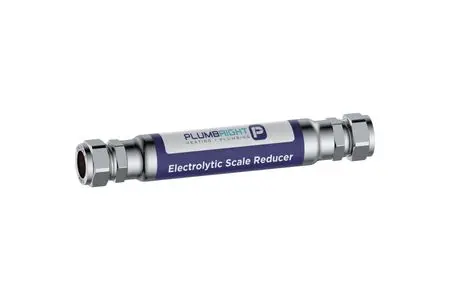
Electrolytic Scale Reducer (ESR)
- Protection Scope: Whole House Protection (protects all hot water outlets and appliances).
- Installation Point: Ideally fitted on the incoming cold mains after the stopcock.
- How It Works: Uses a sacrificial zinc anode to release ions, chemically altering the structure of calcium carbonate to make it less "sticky."
- Effectiveness: Generally offers more consistent and reliable long-term protection against limescale.
- Lifespan: Long lifespan (often 5-10 years), but the sacrificial anode will eventually degrade and require replacement.
- Best For: Protecting your entire hot water system (boiler, cylinder, taps, shower, dishwasher, etc.).
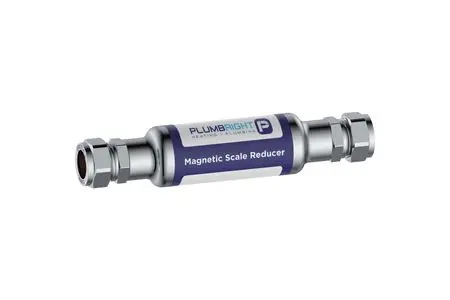
Magnetic Scale Reducer (MSR)
- Protection Scope: Single Appliance Protection.
- Installation Point: Fitted on the pipework within 1 metre of the specific appliance it protects (e.g., the boiler).
- How It Works: Uses a strong, permanent magnetic field to physically alter the properties of the hard water minerals as they pass through.
- Effectiveness: Effectiveness can vary based on water hardness and flow rate; the scale-reducing effect dissipates over distance.
- Lifespan: The permanent magnets mean the unit itself lasts a very long time, but the beneficial effect on the water is temporary.
- Best For: A budget-friendly option specifically for protecting one high-value appliance, such as a new boiler.
Choose the Plumbright Electrolytic if you want:
- Whole-House Peace of Mind: You want to protect every appliance and fitting that uses hot water in your home, including your taps and showerheads.
- Maximum Protection for Your Boiler: The ESR is widely seen as the superior choice for consistent, long-term protection of the central heating system and boiler heat exchanger.
- Long-Term Consistency: You prefer a device that offers a reliable, chemically-assisted method of scale reduction throughout the property.
Choose the Plumbright Magnetic if you want:
- Appliance-Specific Protection: Your main concern is protecting a single new, expensive appliance (e.g., a boiler or hot water cylinder), and you need a WRAS-approved solution to comply with regulations.
- A Budget-Friendly Solution: The Magnetic Scale Reducer is typically the more cost-effective option for initial compliance.
- Simple, Zero-Maintenance Design: It's an incredibly simple device with no sacrificial parts, so there's no degradation of internal components.
The final recommendation: For comprehensive, lasting protection and maximum efficiency, the Electrolytic Scale Reducer installed on the main incoming supply provides the best value and longest lifespan for your entire home.
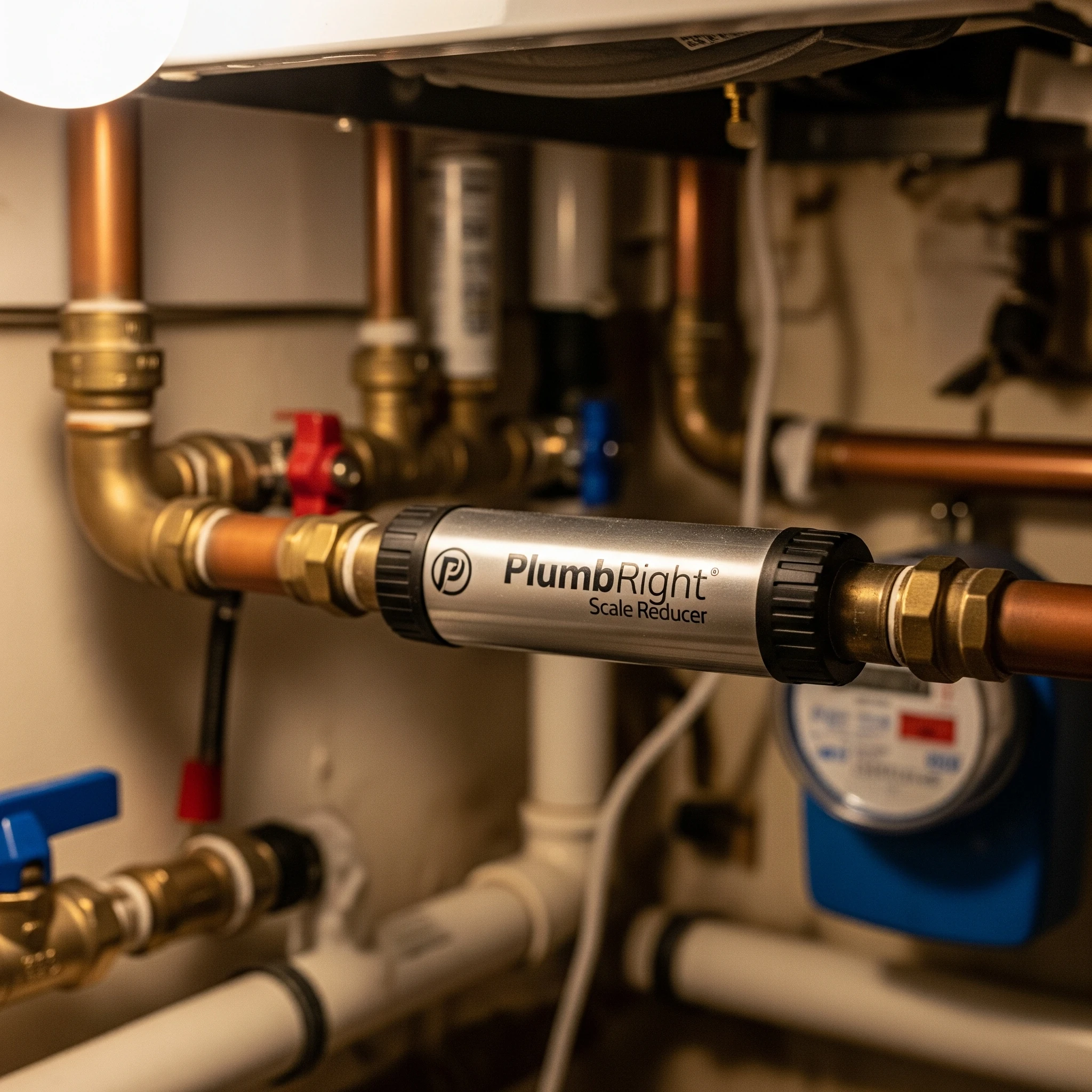
Buy Scale Reducers From City Plumbing
Protecting your boiler, pipes, and appliances from limescale buildup will help you save on energy bills and avoid costly repairs down the line. Choosing the right scale reducer is a vital step in maintaining the health and efficiency of your plumbing and heating systems, especially in hard water areas.
It’s always a good idea to consult with a qualified plumber to determine the best type of scale reducer for your specific plumbing system and needs. Whatever option you choose, you’ll find a product to suit your specific needs and budget at City Plumbing.
If you’re looking for helpful advice and suggestions on the best ways to keep your home in great shape this season, take a further look at the City Plumbing website for more information.
Help & Feedback
 Chat With Us
 Give Us Feedback