Branch Locator
Blog
Toolbox




Favourites

Account

Basket
VAT:
Ex
Inc


Solar Recycling Scheme - Everything you need to know
Published: 27 Jul 2023 ・ Read time: 5 mins
In today's world, sustainability has never been more important, and the Solar Recycling Scheme is a perfect example of how we can harness the power of technology to make a difference.
Whether you're a solar installer, a solar panel manufacturer, or simply someone who cares about the environment, the Solar Recycling Scheme is something you need to know about.
Solar Panel Waste Crisis
Solar panels allow homeowners and businesses to generate their own renewable electricity in an effort to diversify energy sources and improve energy efficiency.
Typically solar panels have a lifecycle of around twenty-five to thirty years, and over time, solar users may experience a loss of efficiency. At the end of their lifespan, you may think Solar Panels are simply thrown out as scrap - however, contrary to popular belief, there are facilities around the UK that are dedicated to recycling solar panels.
With solar panels increasing in popularity, by 2050, it is estimated that there will be over 60 million tons of waste from old solar panels to tackle. Due to the sheer quantity of waste produced in the UK and EU,recyclable solar panels have become a requirement.
Solar panel suppliers are required to join a distributor take-back program in accordance with the Waste Electrical and Electronic Equipment (WEEE) Directive that ensures the retrieval and recycling of solar panels in addition to their installation.
The Solar Recycling Scheme Explained
The Solar Recycling Scheme is a voluntary program devised by the Solar Energy Industries Association in 2016. The program strives to ensure that solar panels and other solar equipment are correctly recycled at the end of their lifespan in an effort to reduce the amount of solar waste produced.
The Solar Recycling Scheme has three main elements:
- A take-back program for solar panels and other solar equipment.
- A network of recycling and refurbishment providers.
- A set of best methods for solar recycling.
The solar take-back program is open to all solar panel manufacturers, installers, and owners when solar panels reach the end of their lifespan to any participating recycling centre.
The recycling centre will then appropriately dispose of the solar panel and recycle the materials.
Furthermore, the Solar Recycling Scheme also has a network of recycling and refurbishment providers. These providers are able to recycle solar panels and other solar equipment in a safe and environmentally responsible manner and can even recycle solar panels that are still in good condition.
Finally, the Solar Recycling Scheme has a valuable list of best practices for solar recycling. These best practices outline the important steps that should be taken to properly recycle solar panels and equipment.
The scheme is only a small step in ensuring that solar panels and other solar equipment are adequately recycled at the end of their lifespan to help prevent waste build-up.

How Solar Panels are recycled
Currently, two types of Solar Panels are used in the UK, silicon-based and thin-film-based; therefore, there are two different recycling methods.
First, it is important to understand the materials that go into making a solar panel.
Silicon-based Solar Panels are recycled and are constructed from a mix of different materials, such as 76% glass, 10% plastic, 8% aluminium, 5% silicon and 1% metals. In contrast, Thin-film-based Solar Panels are constructed from 89% glass, 4% plastic, 6% aluminium and 1% metals.
- Silicon-based solar panels are first disassembled to remove the glass and aluminium.
- 95% of the removed glass is reused, as well as 100% of the aluminium.
- The rest of the solar panel is then sent for thermal processing at 500 degrees Celsius. This method will evaporate the covering plastic, which is used to fuel the thermal processing itself.
- Next, the cell models are removed, with 80% of them being reused. Any cell modules that cannot be reused will instead have the silicon wafers etched off, which are then melted down.
- Following this, 85% of the silicon is reused, concluding the recycling process for Silicon-based Solar Panels.
Thin-film-based Solar Panels use a different method entirely.
- First, the solar panels are shredded into smaller pieces to remove the lamination.
- The resulting small pieces are then fed through a rotating screw which separates the solid and liquid components.
- Following this, they are then positioned into a bath of acid and peroxide which then removes the film.
- After that, the materials are then separated through vibration, with the glass being rinsed and reused. 90% of the glass in a thin-film solar panel can be reused.
- Following the removal process of the glass, the rest of the materials are dried via a dewatering procedure. Once this is done, the materials are then separated and processed.
- 95% of the semiconductor materials in each solar panel can be reused.
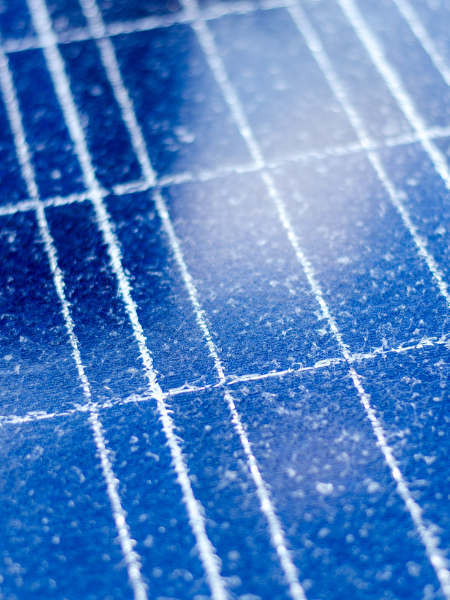
When should I replace my solar panels?
As previously mentioned at the beginning of this article, Solar Panels generally have a lifespan of 25 to 30 years; however, it's important to note that this doesn't mean they will stop working.
In fact, the lifespan of a solar panel is actually based on their efficiency levels as solar panels will gradually become less efficient throughout their lifetime.
Over the first twenty years, they will reduce efficiency by approximately 10%, which is pretty good.
In the following years, Solar Panels will continue to degrade more rapidly and will most likely have lost up to 20% of their efficiency when you have used them for around thirty years.
The question is, how do you know when you need to replace solar panels? And what should you be looking out for?
First, a common telltale sign is when solar panels no longer produce enough electricity to power your home or office; this means the solar panels are no longer efficient enough and replacing them would be advisable.
Additionally, solar panels should be replaced if they show any clear signs of physical damage.
Are Solar Panels easy to remove?
Solar Panels are reasonably straightforward to remove, and will only require a few tools to do so.
For starters, it's recommended that you use a long ladder so you can gain access to the roof.
Having a good knowledge of electronics is also valuable, as solar panels contain electrical wiring, so it's pivotal that you use insulated gloves to avoid getting an electric shock.
Be mindful before disconnecting a solar panel from the roof because Solar Panels are delicate and can shatter easily if you are not careful.
The Solar Recycling Scheme is a crucial step towards a sustainable future.
By properly disposing of old solar panels and reusing their components, we can reduce waste and preserve valuable resources.
If you have further questions regarding Solar Panels, check out our Solar Panel FAQs, where we answered some of the nation's common questions.
If you are an installer, reading about Solar Panel installation best practices might be beneficial to help you deliver a safe and professional installation for your next project.
City Plumbing energy-efficiency experts are on hand if you require further information. Just get in touch or contact your local City Plumbing branch.
Other articles
Solar Panels FAQs - Your Common Questions Answered
31 May 2023 ・ 7 mins
The key types of renewable energy explained
03 Mar 2022 ・ 5 mins

Solar Panel Installation Best Practices
15 May 2023 ・ 6 mins
How to become a renewable energy engineer
03 Mar 2022 ・ 7 mins
Help & Feedback
 Chat With Us
 Give Us Feedback