



Favourites

Account

Basket
VAT:
Ex
Inc


In the modern UK kitchen, the humble kettle is finally meeting its match. As homeowners look for ways to streamline their morning routines and reduce energy waste, instant boiling water taps have moved from a "luxury extra" to a must-have upgrade.
From busy parents needing to sterilise a bottle in seconds, to home cooks looking to shave ten minutes off the pasta-boil time, or just anyone simply tired of the "over-boiling" habit that creeps up energy bills, these taps are a game-changer.
At City Plumbing, we see firsthand how the right kitchen tech can transform a home’s efficiency. Here, we explore why you should consider recommending these systems to your customers, how they actually stack up in terms of energy usage, and the safety features that make them a smart choice for every household.
Why Recommend Instant Hot Water Taps to UK Homeowners?
As installers and plumbing experts, you’ll know that performance and space-saving are top priorities for British kitchens. Instant hot water kitchen taps (often called boiling water taps) have shifted from a luxury "extra" to a staple in modern UK kitchens, making them fantastic investments for many homeowners. If your customers are considering one, here’s a quick breakdown of why they’re so popular.
- Ultimate Convenience: Deliver near-boiling water instantly for tea, coffee, or cooking. No more waiting for the kettle to boil while the rest of the meal gets cold.
- Space-Saving Design: By removing the kettle from the worktop, you declutter the kitchen, a major selling point for homeowners with smaller "galley-style" layouts.
- Precision and Less Waste: Most users overfill a kettle, wasting both water and electricity. A tap allows you to get the exact amount you need, whether it’s a single mug or a large pan.
- Premium Filtration: Most systems include high-grade filters that improve the taste of UK mains water by removing chlorine and impurities.
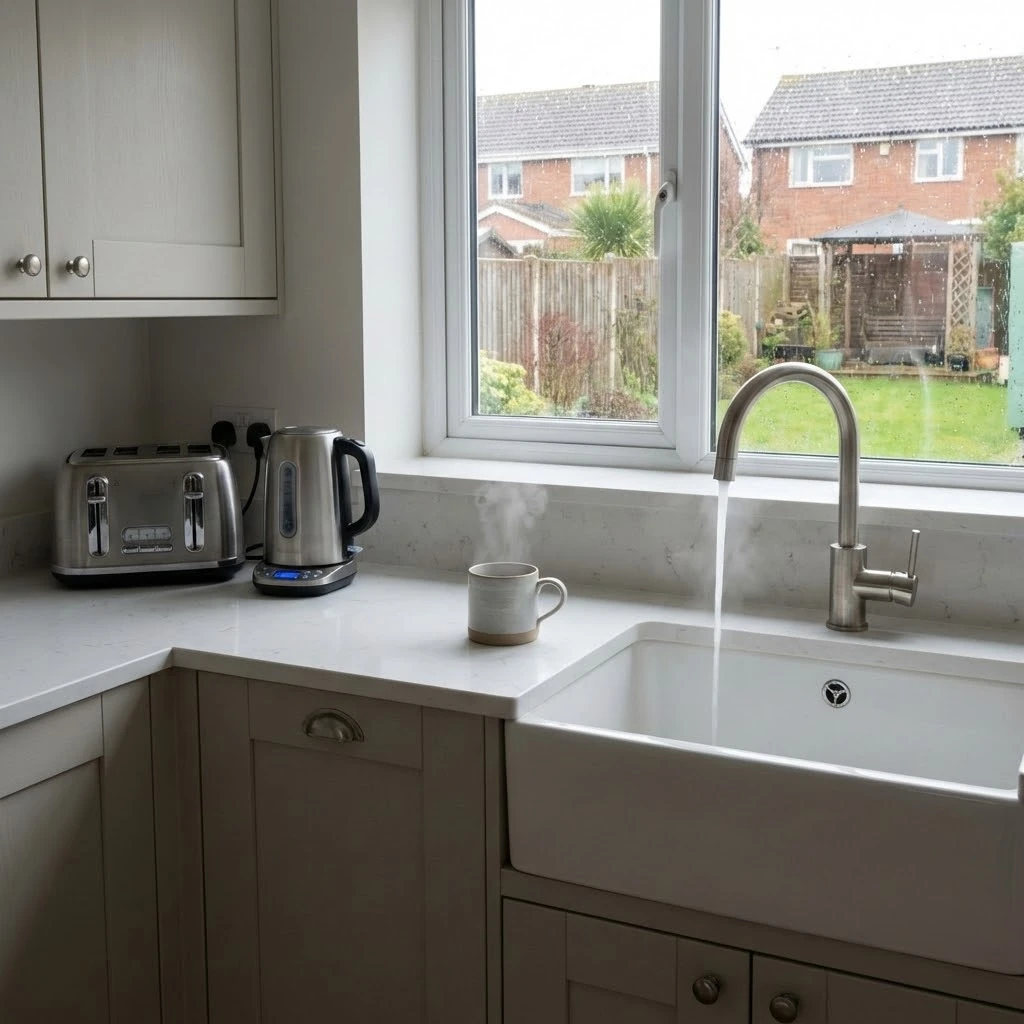
Instant Hot Water Taps Are Energy Efficient
One of the most common questions we get at our City Plumbing trade counters is: "Is an instant hot water tap expensive to run?" The answer is surprisingly "no." These taps are designed to be the most energy-efficient additions.
- Instant Hot Tap:
Standby Power: Modern vacuum-insulated tanks use very little energy—typically 10-20W.
Daily Cost: On average, it costs between 10p and 15p per day to stay hot.
Efficiency: Because you only dispense what you use, there is zero water waste.
- Traditional Kettle:
Power Spike: A standard 3kW kettle consumes a large amount of energy per boil.
Cost per Use: At current UK rates, a full boil costs roughly 3p–6p.
The "Kettle Tax": Most people boil the kettle 5–8 times a day and often heat twice as much water as they need, making the tap the more economical choice for busy households.
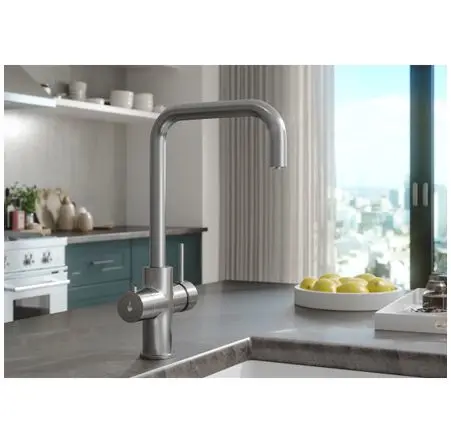
Instant Hot Water Taps Promote Safety
A key selling point for families with young children or elderly relatives is that an instant hot water tap is often significantly safer than a portable kettle.
- No Dangerous Cables: There are no trailing leads for children to pull on.
- Fixed Position: The tap cannot be knocked over.
- Safety Locks: Most require a "push-and-twist" or electronic sequence to activate the boiling function, making it very difficult for small children to operate.
- Insulated Spouts: Advanced "cool-touch" technology ensures the tap's outer surface remains safe to handle, even when 98°C water is flowing.
Frequently Asked Questions About Instant Hot Water Taps
Do they actually reach 100°C?
Most instant hot water taps deliver water at 98°C. This is intentional; 100°C water can burn tea leaves or coffee grounds, making them taste bitter. It is also safer as it prevents the "spluttering" associated with a rolling boil.
Do they take up much cupboard space?
The tanks are surprisingly compact. A standard 2.4L tank (enough for about 6–8 mugs) is roughly the size of a large cereal box and is usually tucked neatly at the back of the sink cupboard.
What maintenance is required?
In hard water areas, scale can damage the heating element. We always recommend using a scale-inhibiting filter (usually included with the kit) and replacing it every 6–12 months to maintain the warranty and efficiency.
Can homeowners install them?
If your customers are comfortable with basic DIY plumbing and have a power socket under their sink, it is possible. However, most UK homeowners hire a plumber (approx. 1–2 hours of work) to ensure the pressure and connections are perfect.
The Professional Edge: Pro-Tips for Installers
Moving from a standard kettle to a boiling water tap is a significant upgrade, so it’s important to present the facts to your customers from a professional perspective. To conclude, here are a few technical considerations that will help ensure a smooth installation and long-term reliability for your customers.
- Check the Water Pressure: Before recommending a specific model, always check the property’s bar pressure. Most boiling water taps require a minimum of 1.5-2 bar to operate effectively. If the pressure is too high, you’ll need to install a Pressure Reducing Valve (PRV) to protect the tank and prevent "spluttering" at the spout.
- Power Socket Placement: Ideally, you want a dedicated 13A socket located in the cupboard under the sink. Avoid using extension leads, as these units draw a significant current (typically around 2kW–3kW) when heating from cold. Advise the homeowner to have this installed by a qualified electrician before you arrive to fit the plumbing.
- Ventilation is Key: While modern tanks are highly insulated, they still require a small amount of airflow. Ensure the cupboard isn't packed so tightly with cleaning supplies that the unit overheats. A small gap around the tank goes a long way.
- The "Hard Water" Talk: Don't skip the filters conversation. If you're installing in a hard water area, emphasise that limescale is the number one cause of tank failure. Setting up a reminder for the customer to change their filter every 6 months will protect their investment and reduce your call-back rate.
- Waste Pipe Clearance: Remember that most tanks include a pressure relief valve that needs to be tuned to the waste pipe. Make sure there is enough room under the sink to accommodate both the tank and the existing trap and pipework without creating kinks.
If you’re looking to help your customers make the move to instant hot water taps, check out our spectacular range at City Plumbing. With competitive prices and varied models, whether you shop in-store at your local City Plumbing branch or online, we’ve got you covered.
Help & Feedback
 Chat With Us
 Give Us Feedback