



Favourites

Account

Basket
VAT:
Ex
Inc


 45 years of trusted expertise
Midea has become a popular choice for those in the trade choosing and recommending heat pumps to customers. And with the Midea M-Thermal range of heat pumps all available to purchase exclusively through City Plumbing, we’ve ensured a selection of quality energy-efficient solutions for space heating, cooling, and domestic hot water, serving as a complete year-round heating system that can either replace or work alongside traditional gas or oil boilers.
Here we offer a helpful breakdown of some of the key aspects of the sought-after M-Thermal range to help you make the best choice for your next installation.
Why Choose The Midea M-Thermal Monobloc Range?
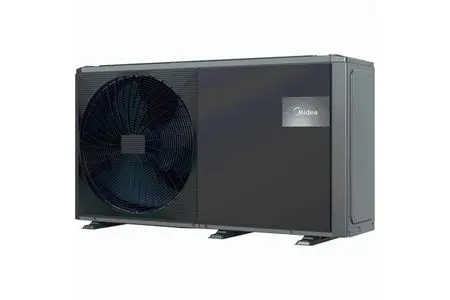
The Midea M-Thermal Monobloc heat pump range is a significant offering from Midea, a global leader in HVAC manufacturing. These units are designed to provide efficient and comprehensive heating, cooling (with an accessory), and domestic hot water solutions for a variety of property types, particularly those with limited indoor space.
1. Monobloc Design and Installation:
- The monobloc design has all refrigerant components in one outdoor unit, so no indoor refrigerant piping is needed. This makes installation simpler.
- As an outdoor unit, it saves indoor space, though a separate cylinder is still needed for hot water storage.
- Factory pre-charged refrigerant and integrated parts simplify installation, requiring only two heat-insulated pipes and cables indoors.
2. Versatile Heating and Cooling:
- All-Year-Round Solution: The M-Thermal range provides both space heating in winter and can be combined with a "Cooling Kit" accessory to offer space cooling in summer, making it a complete climate control system.
- Domestic Hot Water (DHW): It also efficiently produces domestic hot water, often up to 55°C, with some newer models reaching up to 75°C even in cold ambient temperatures. There's also a Legionella protection program included.
- Compatibility: They're designed to replace traditional gas or oil boilers or work in synergy with existing heating solutions.
3. High Efficiency and Performance:
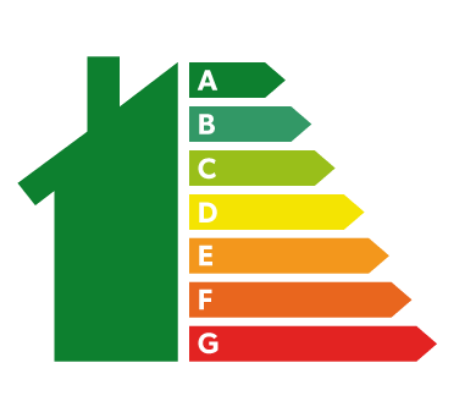
- A+++ ErP Energy Rating: Midea M-Thermal heat pumps consistently achieve the highest energy efficiency ratings (A+++ at 35°C flow temperature, and A++ at 55°C flow temperature).
- Wide Operating Range: These units are engineered to perform effectively in a broad range of outdoor temperatures. Some models offer 100% heating capacity at -7°C and can operate down to -20°C or even -25°C, maintaining a hot water supply.
- High SCOP (Seasonal Coefficient of Performance): They boast impressive SCOP figures, indicating high efficiency over an entire heating season. For example, some 8kW models have a SCOP of 5.03 at 35°C.
- All DC Inverter Technology: Midea utilises full DC inverter technology for the compressor, fan motor, and pump, allowing for precise control, enhanced efficiency, and quieter operation.
4. Quiet Operation:
Low Noise Levels: A significant selling point for the M-Thermal range is its remarkably quiet operation. Many models claim sound pressure levels as low as 35 dB(A) at 3 meters, making them amongst the quietest on the market. There are also programmable silent modes.
5. Advanced Control and Smart Features:
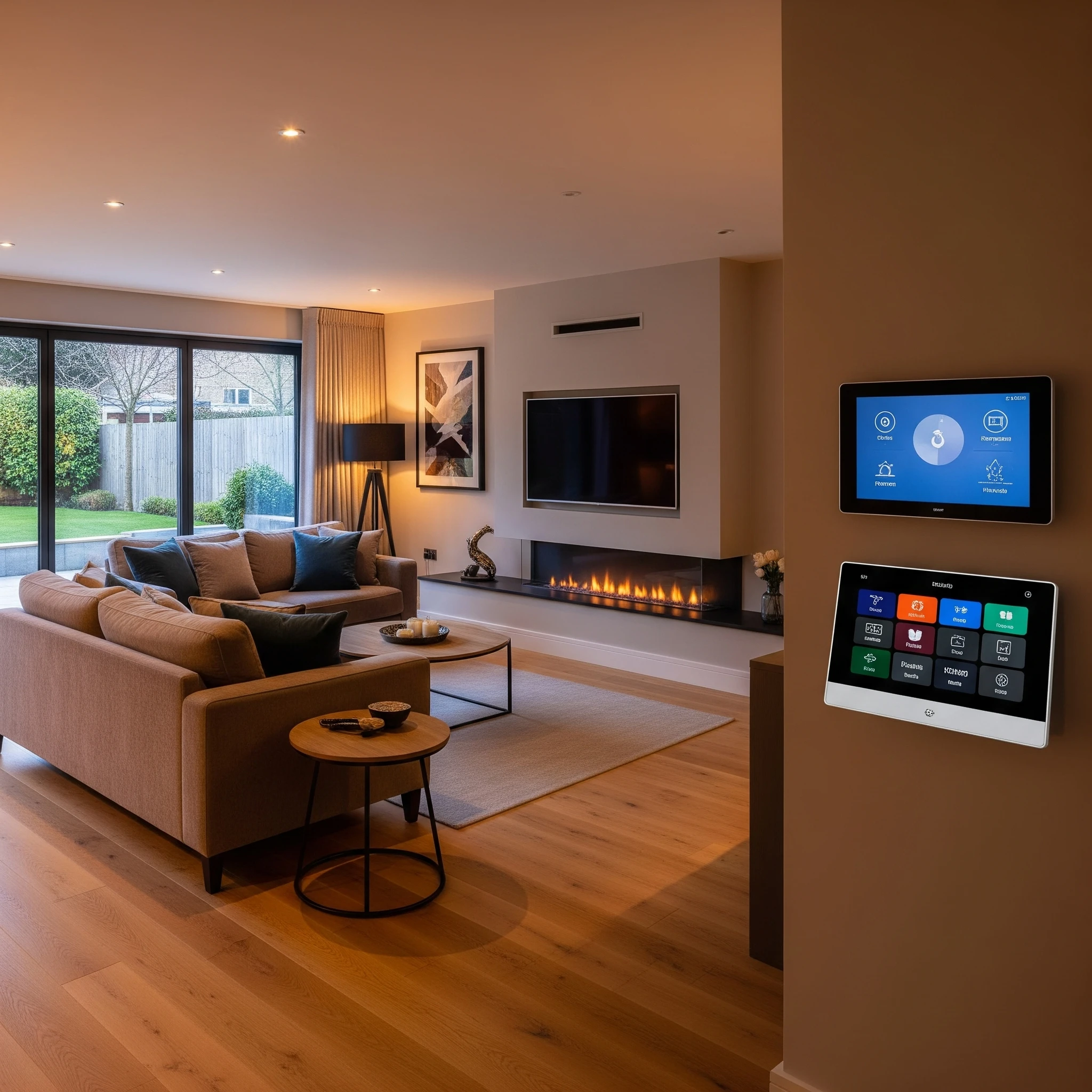
- Intuitive Controller: The units come with a user-friendly wired controller featuring an LCD or colour screen, enabling daily and weekly programming, temperature management, and operating mode selection.
- Smart Connectivity: Built-in Wi-Fi and app control (via the MSmartHome or ICONNECT SMART HOME APP) are standard. This allows users to remotely monitor unit status, control settings, view energy consumption data, and receive energy-saving suggestions from anywhere.
- Weather Compensation: This feature adjusts the heat pump's output based on outdoor temperatures, optimising efficiency and comfort.
- Two-Zone Control: Many models offer the ability to control two separate heating zones.
- Energy Monitoring: Energy consumption data is available for running cost analysis.
- Remote Diagnostics: The "Mi-Cloud" system allows for remote access to unit status and data, potentially preventing unnecessary site visits for diagnosis.
6. Refrigerant Type:
- R32 Refrigerant: Many M-Thermal monobloc units use R32 refrigerant, which has a lower Global Warming Potential (GWP) compared to older refrigerants, aligning with environmental regulations.
- R290 (Propane) Models: Midea also offers the M-Thermal Arctic HT Series models, which utilise R290 (propane) refrigerant, boasting an ultra-low GWP of 3, making them an even more environmentally friendly choice. These R290 models can achieve higher water temperatures, up to 75°C at -10°C ambient, and 55°C at -25°C ambient.
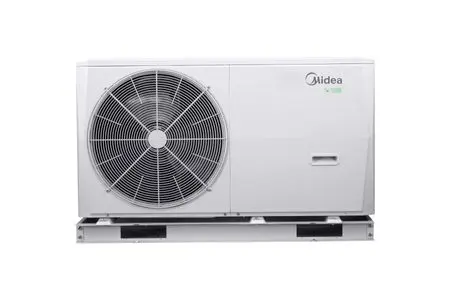
7. Capacities and Dimensions:
- Wide Range of Outputs: The Midea M-Thermal Monobloc range is available in various capacities to suit different property sizes and heating demands.
Single Phase: Typically from 4 kW to 16 kW.
Three Phase: Typically from 12 kW to 30 kW.
- Compact Footprint: Dimensions vary by output, but they are designed to be compact.
8. Warranty:
Extended Warranty: Midea offers a competitive 10-year warranty on many of its M-Thermal heat pumps, demonstrating confidence in their product reliability. (Note: Warranties typically require annual servicing)
What Are the Differences Between Midea’s R32 and R290 M-Thermal Heat Pumps?
The main differences between Midea's R32 and R290 M-Thermal heat pumps lie in their refrigerant type, environmental impact, and performance characteristics, especially regarding water temperature and cold climate operation.
- Refrigerant & Environmental Impact:
R32: A hydrofluorocarbon (HFC) with a Global Warming Potential (GWP) of 675. It's low-flammable and a significant improvement over older refrigerants like R410A.
R290: A natural hydrocarbon (propane) with an ultra-low GWP of 3. It's highly environmentally friendly but is flammable, requiring more stringent safety protocols during installation.
- Performance:
Max Water Temperature: R290 units can achieve higher water outlet temperatures, up to 75°C, making them highly suitable for homes with traditional radiators. R32 typically reaches up to 60-65°C.
Cold Weather Performance: While both are excellent in cold climates (down to -25°C), R290 often maintains better heating capacity and higher water temperatures at very low ambient temperatures.
Efficiency (SCOP): Both are A+++ rated and highly efficient, but R290 may offer a marginal edge in SCOP, especially in colder conditions.
- Installation & Cost:
R290 units generally have stricter installation requirements due to their flammability and may have a slightly higher upfront cost.
R32 offers more installation flexibility and might be slightly less expensive initially.
Ultimately, R290 is the more environmentally friendly and powerful option for high-temperature heating systems in colder climates, while R32 remains a highly efficient, reliable, and widely adopted choice with simpler installation considerations.
Buy Midea Heat Pumps at City Plumbing
Overall, the Midea M-Thermal Monobloc heat pump range is positioned as a highly efficient, quiet, and feature-rich solution for modern homes, offering a strong alternative to traditional fossil fuel heating systems. Its compact design and simplified installation are particularly appealing for those homeowners looking to maximise indoor space.
Available to purchase directly from City Plumbing, if you want to help your customers make the switch to heat pumps, why not speak to the Renewables Team at City Plumbing? Experts in the latest energy-efficient technologies, we're perfectly placed to help homes and businesses make the smooth transition to renewable technology.