Branch Locator
Blog
Toolbox




Favourites

Account

Basket
VAT:
Ex
Inc


Promote Clean Finishes With Lead-Free Wire
Published: 22 Apr 2025 ・ Read time: 6 Mins
If you’re looking for a reliable and high-quality lead-free solder wire to promote clean finishes in your soldering projects, City Plumbing has you covered.
With years of experience in providing top-notch soldering products, our lead-free wire is becoming an increasingly popular choice for those in the trade for a whole host of applications.
Here we consider why choosing lead-free for your projects is such a good choice while highlighting just one of our most popular brands of this product, that of Tradesave.
What Is Lead-Free Wire?
Lead-free solder wire is a type of solder that does not contain lead. Traditional solder was often made from a mixture of tin and lead, but due to lead toxicity, regulations like the RoHS directive have pushed for the use of lead-free alternatives in many applications, especially electronics and plumbing for potable water.
Lead-free solder wire is typically composed of various alloys, with tin (Sn) being the primary component. Other metals are added to achieve specific properties like melting point, strength, and wetting characteristics.
Why Choose Lead-Free Solder Wire?
Lead-free solder wire is becoming increasingly popular due to its environmental benefits. Traditional solder wire that contains lead can be harmful to both humans and the environment. By choosing lead-free solder wire, you can promote cleaner and safer working conditions while also doing your part to protect the planet.
The Benefits of Lead-Free Solder Wire
Lead-free solder wire offers several significant benefits compared to traditional lead-based solder:
1. Health and Safety:
- Reduced Toxicity: The primary benefit is the elimination of lead, a toxic heavy metal that can cause various health issues, including neurological problems, developmental issues in children, kidney damage, and high blood pressure. Using lead-free solder protects both the user and consumers of the products being soldered.
- Safer Working Environment: Workers in manufacturing and repair environments are no longer exposed to lead fumes and dust generated during the soldering process, leading to safer and healthier working conditions.
2. Environmental Responsibility:
- Reduced Environmental Contamination: Lead can leach into soil and water from discarded electronics and manufacturing waste, harming ecosystems and wildlife. Lead-free solder minimises this risk, contributing to a cleaner environment.
- Compliance with Regulations: Many regions worldwide, including the European Union (RoHS directive) and increasingly other countries, have regulations restricting or banning the use of lead in electronics and other products. Using lead-free solder ensures compliance with these regulations.
- Improved Recyclability: Lead contamination can complicate the recycling process of electronic waste. Lead-free components make recycling more sustainable.
3. Performance and Reliability:
- Stronger Joints: Lead-free solder alloys, particularly those containing copper and silver (like SAC alloys), often create solder joints with higher tensile strength and improved resistance to thermal fatigue compared to traditional lead-tin solder.
- Good Electrical Conductivity: Many lead-free alloys, especially those with silver and copper, offer excellent electrical conductivity, crucial for electronic applications.
- Suitability for Modern Electronics: Lead-free solders are generally well-suited for the complex demands of modern electronics assembly, although careful process control is necessary due to their different properties.
- Corrosion Resistance: Some lead-free alloys exhibit better corrosion resistance, which can improve the long-term reliability of soldered connections, especially in humid environments.
4. Market and Future Trends:
- Growing Demand for Eco-Friendly Products: Consumers and industries are increasingly seeking environmentally friendly and sustainable products. Using lead-free solder aligns with this growing demand.
- Long-Term Viability: As regulations become stricter and environmental awareness increases, lead-free solder is likely to become the universally accepted standard. Early adoption positions manufacturers for long-term success.
Where To Use Lead-Free Wire
Fortunately, lead-free solder wire is ideal for using used in a wide range of applications, including:
- Electronics Manufacturing: Due to regulations like RoHS, lead-free solder is now the standard for soldering components onto printed circuit boards (PCBs) and in other electronic assemblies.
- Plumbing: For potable (drinking) water systems, lead-free solder is essential to prevent lead contamination of the water supply. Different lead-free alloys are specifically formulated for plumbing applications.
- Jewellery Making: Some lead-free solders are used in jewellery making, especially for pieces that may come into contact with skin.
- Automotive Industry: Lead-free soldering is increasingly used in automotive electronics and other applications.
- General Electrical Work: For various electrical connections where environmental concerns are important.
- Metal Crafting: Used for joining copper, brass, pewter, and zinc in crafting projects.
Important Considerations When Working With Lead-Free Wire
- Higher Melting Point: Lead-free solders typically have a higher melting point than lead-based solder, requiring soldering equipment capable of reaching higher temperatures and more precise temperature control.
- Different Wetting Characteristics: Lead-free solder may exhibit different wetting behaviour, requiring optimised flux selection and soldering techniques to ensure proper joint formation.
- Potential for Tin Whiskers: Alloys with high tin content can be susceptible to tin whisker formation, although this can be mitigated through alloying with other metals and proper manufacturing processes.
Despite these considerations, the benefits of lead-free solder wire, particularly regarding health and environmental protection, make it the preferred and increasingly mandatory choice for a wide range of applications.
Shop Lead-Free Solder Wire at City Plumbing
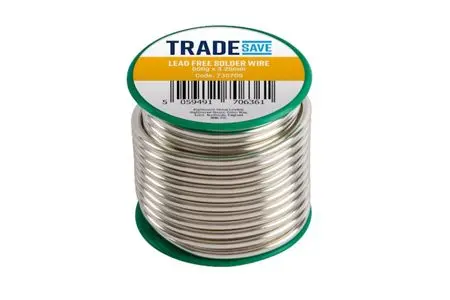
Here at City Plumbing, we’re proud to offer a vast selection of lead-free soldering wire from the renowned brand Tradesave. Their solder wire is made with high-quality materials that provide excellent conductivity and reliability. Whether you're working on a small DIY project or a large-scale industrial application, Tradesave solder wire is designed to deliver exceptional results every time.
- Superior Joint Integrity: Formulated for reliable and strong connections, ensuring the longevity and performance of your work.
- Impeccable, Clean Finishes: Achieve smooth, professional-looking solder joints that reflect the quality of your crafting.
- Environmentally Responsible: Embrace a lead-free solution that meets modern environmental standards and regulations.
- Excellent Flow and Wetting: Engineered for optimal flow and wetting action, making soldering easier and more efficient.
- Versatile Applications: Suitable for a wide range of electrical and plumbing applications.
- Trusted Tradesave Quality: Benefit from a brand known for providing reliable and dependable products.
Go Lead-Free For Cleaner, Stronger, Long-Term Results
Overall, lead-free solder wire is a crucial material for joining metals in a variety of industries, offering a safer and often stronger alternative to traditional lead-based solders, albeit with slightly different handling characteristics and requiring appropriate tools and techniques.
Whether you're an electrician ensuring secure wiring in properties, a plumber creating robust pipe connections, or a DIY enthusiast tackling projects with precision, lead-free solder wire, like that from the Tradesave range, is your trusted partner for clean, strong, and environmentally sound results.
If you’re looking for advice and suggestions on choosing the best plumbing products for your projects, take a further look at our City Plumbing website for more information.
Help & Feedback
 Chat With Us
 Give Us Feedback