


Favourites

Account

Basket
VAT:
Ex
Inc


Ever since its first use in the UK in the 1960s, there has been ongoing debate over plastic vs copper plumbing. Each has its own distinct advantages, and both have their champions within the trade.
Here at City Plumbing, we've created a quick but handy guide to help you navigate the nuances of copper pipe vs plastic. Whether you’re a professional installer or a homeowner embarking on a DIY renovation, our experts have refreshed this guide to reflect modern plumbing standards and current expert recommendations, helping you choose the right material for your next project.
At a Glance: Copper vs Plastic
If you’re looking for a quick breakdown of copper pipe vs plastic to help decide which material suits your specific project, here’s a handy comparison:
Best Uses:
- Copper: Ideal for tight spaces, visible pipework, and high-heat areas.
- Plastic: Best for long runs, DIY projects, and budget-conscious builds.
Installation:
- Copper: Requires soldering or specialist tools; generally more time-consuming.
- Plastic: Uses push-fit or crimp joints; fast to install and entirely flame-free.
Durability:
- Copper: Extremely long-lasting; naturally resists UV damage and fire.
- Plastic: Highly corrosion-resistant and flexible; typically lasts 50+ years.
Cost:
- Copper: Sits at a premium price due to fluctuating raw-material costs.
- Plastic: Significantly more affordable with more stable market pricing.
Noise:
- Copper: Can be noisy (susceptible to "water hammer") at high pressure.
- Plastic: Naturally dampens the sound of rushing water, making it much quieter in operation.
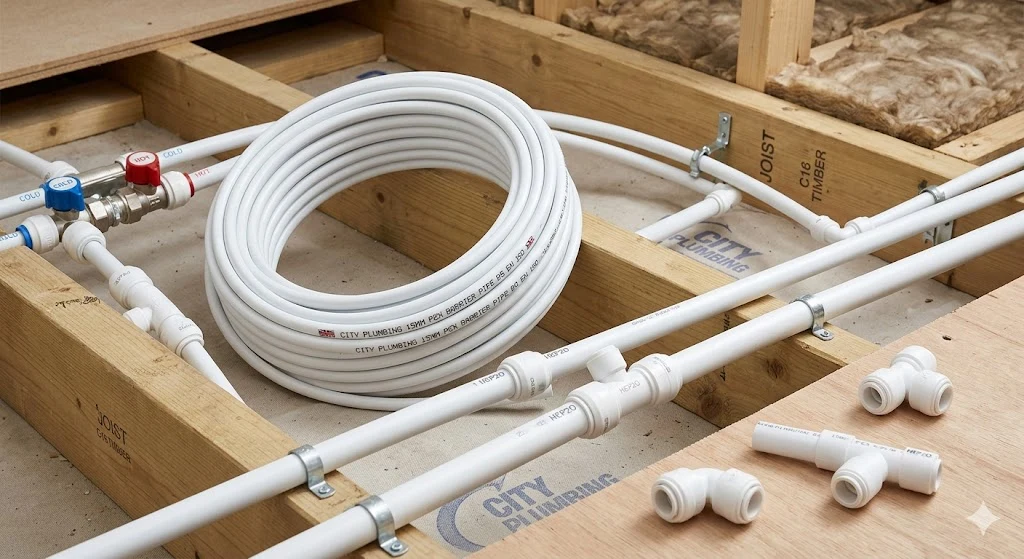
Plastic Plumbing (PVC & PEX)
Often considered the modern standard for new builds and DIY renovations, plastic piping has evolved into a strong, lightweight, and durable solution.
While it was originally popularised in post-war Europe for its cost-effectiveness, modern debates over plastic vs copper plumbing often highlight plastic's resistance to scale buildup and its "forgiving" nature in freezing temperatures.
Expert Insight: When to Choose Plastic
"Plastic is often best suited to modern residences, where priorities are speed of installation and budget. Since it does not require a naked flame to install, it is a much safer option for DIYers or for working in timber-framed buildings. However, environmental factors must be considered." As Mark Whickham (City Plumbing, Oban) and Bobby Wray (City Plumbing, Darlington) note, '"Plastic can be susceptible to rodent damage in certain rural or older properties."
Best Use Cases for Plastic:
- Long, Straight Runs: Its flexibility allows for fewer joints over long distances, reducing the risk of leaks at connection points.
- Cold Climates: Plastic is more flexible than copper when water freezes, reducing the risk of bursting under pressure.
- High-Traffic Areas: Its natural impact resistance makes it hardy against accidental knocks during construction or renovation.
Copper Piping
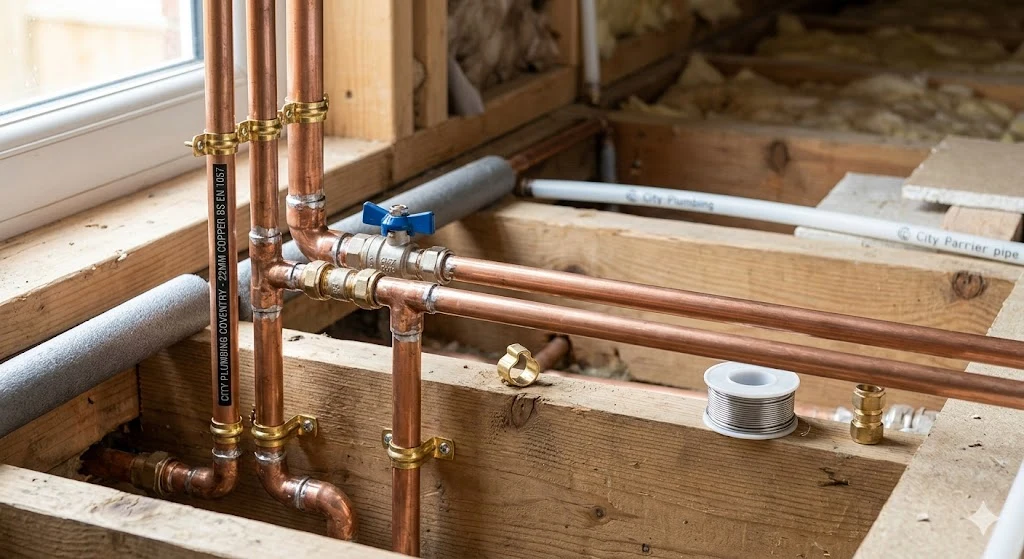
Copper remains the "gold standard" for many professional plumbers. It is a naturally occurring, antimicrobial metal that can be moulded into thin, rigid pipes that look neat and professional.
Expert Insight: The Case for Copper
Copper is traditionally the material of choice. Kevan Rimmer (City Plumbing, Ramsey) notes that, “Materials should be chosen based on the specific scenario. Copper is ideal for visible pipework, offering a professional and neat appearance. Additionally, copper pipes have a smaller external diameter than plastic for the same internal flow, making them the only real choice when fitting plumbing into extremely tight wall voids or floor joists.”
Best Use Cases for Copper:
- Visible Installations: Perfect for traditional radiators or exposed industrial-style plumbing where aesthetics matter.
- Tight Spaces: Its rigidity and slim profile allow it to fit where bulky plastic connectors cannot.
- High-Temperature Areas: Copper handles extreme heat better than most plastics, making it the preferred choice for final connections to boilers and cylinders.
Safety and Health: Debunking the Myths
When comparing plastic pipe vs copper, there is often debate regarding the safety of these materials. Modern manufacturing standards ensure both are safe for domestic use.
- Plastic: Older concerns regarding "plastic taste" or chemical leaching are largely outdated. Modern PVC and PEX pipes are rigorously tested. Any "plastic" taste usually dissipates within the first few weeks of a new installation.
- Copper: While copper is a natural material, it can corrode if your local water supply is highly acidic. However, the body expels copper quickly, and the risk of health issues from domestic piping is considered minimal by modern standards.
Final Verdict: Which is Better; Copper or Plastic Pipe?
There’s no single "winner" in the copper pipe vs plastic debate. If you’re looking for a cost-effective, quiet, and DIY-friendly solution, plastic pipe vs copper usually tilts in favour of plastic. However, if you want a long-lasting, aesthetically pleasing, and space-saving installation that adds a premium feel to your home, copper remains the professional's choice.
As the experts at City Plumbing suggest, the best approach is often a hybrid one: using copper where it's visible or in tight spaces, and plastic where it's hidden and involves long runs.
For even more expert guidance, tips, and tailored solutions to keep your home at peak performance, visit the City Plumbing website today and connect with our team. Let us help you find the perfect piping solution for your next project. From Copper Pipes to Plastic Plumbing, we’ve got you covered.
Help & Feedback
 Chat With Us
 Give Us Feedback