



Favourites

Account

Basket
VAT:
Ex
Inc


 45 years of trusted expertise
As of mid-2026, UK homeowners managing domestic photovoltaic installations must balance natural weather benefits with routine physical upkeep. Solar panels in the UK rarely need frequent cleaning because rainfall and hydrophobic glass coatings naturally clear most surface dirt. However, a scheduled clean every 18 to 24 months keeps output close to peak levels. Routine visual inspections, professional servicing every three to five years, and simple bird-proofing measures protect the system from hot spots, wiring damage, and avoidable efficiency loss.
Do Solar Panels Need to be Cleaned in The UK?
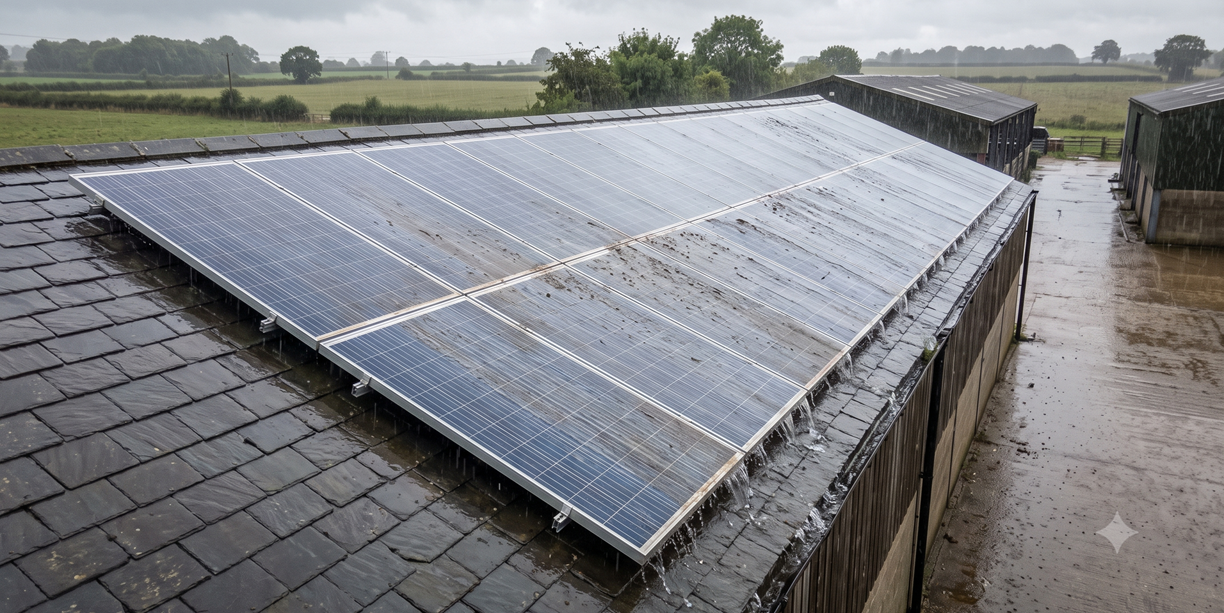
Homeowners often assume that Britain's wet weather makes cleaning unnecessary, and to a large extent that is true. Most domestic arrays are fitted with a hydrophobic coating on the glass surface. When panels are pitched at 15 degrees or more, UK rain sheets off easily, carrying away light solar panel dust, pollen, and grime. This natural washing effect is why well-sited UK systems typically continue generating at roughly 93% to 97% of their original output without any manual intervention.
However, rain cannot remove everything. The requirement for cleaning comes down to site-specific factors:
- Roof pitch: shallow angles under 15 degrees allow debris to settle rather than wash away.
- Location: proximity to farmland, busy roads, or trees increases pollen, dust, and sap deposits.
- Season: prolonged dry summer spells let grime bake onto the glass surface.
- Bird activity: droppings create concentrated, stubborn residue that rain alone cannot shift.
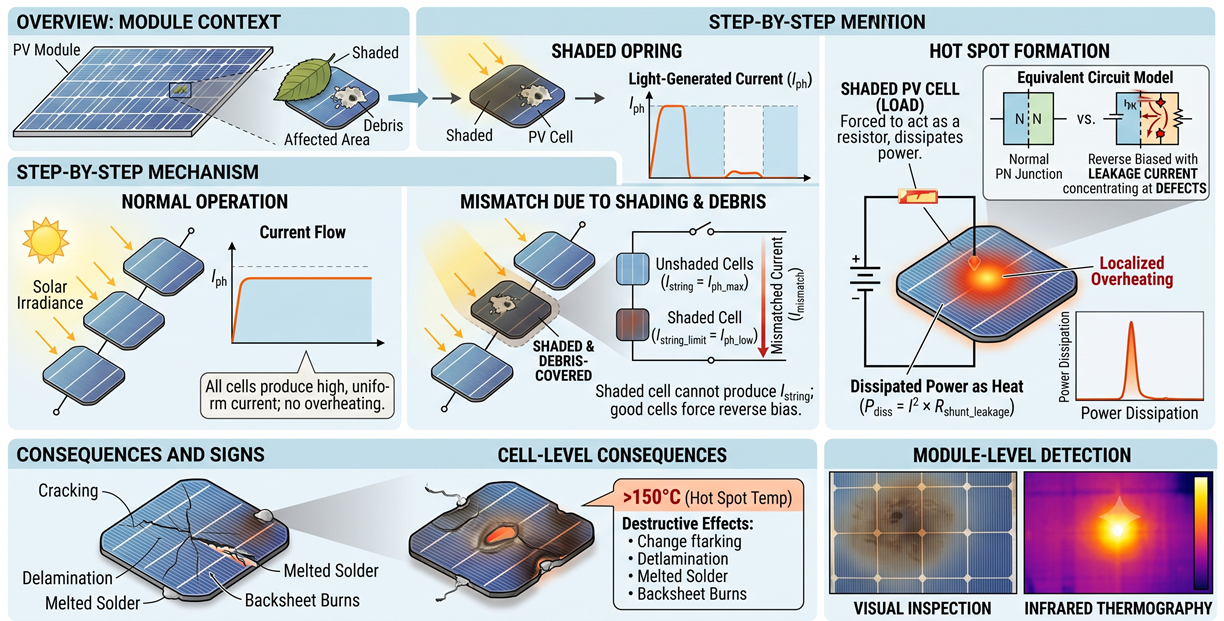
When dirt or droppings accumulate, they create a physical barrier that blocks light from reaching the solar cells, gradually reducing energy generation and creating a measurable performance impact. Left unaddressed, concentrated grime causes localised hot spots and accelerates cell degradation.
How Often Should Solar Panels be Cleaned?
For a standard pitched domestic installation, solar panels should be cleaned every 18 to 24 months. Regular rainfall handles most light debris in between. Several environmental conditions can shorten that cleaning frequency considerably:
- Low-pitch roofs: arrays angled below 15 degrees shed water less effectively and need attention once or twice a year.
- Coastal properties: salt spray leaves a residue that dulls the glass surface faster than inland sites.
- Urban or agricultural surroundings: traffic pollution and farm dust build up more quickly.
- Overhanging trees or heavy bird activity: sap, leaves, and droppings create localised hot spots if not addressed promptly.
To assess whether a clean is due, check your generation figures against expected seasonal output. You can reference independent baseline figures from the Energy Saving Trust to verify expected domestic yields. Schedule cleaning work for cool mornings or evenings in early spring.
PV Panel Cleaning Methods and Best Practices
Before any work begins, the system should be powered down completely at the main isolator switch and inverter. Photovoltaic cleaning should only take place during cool, overcast mornings or evenings, since spraying cold water onto hot glass in direct sun can cause micro-fissures or cracked modules.
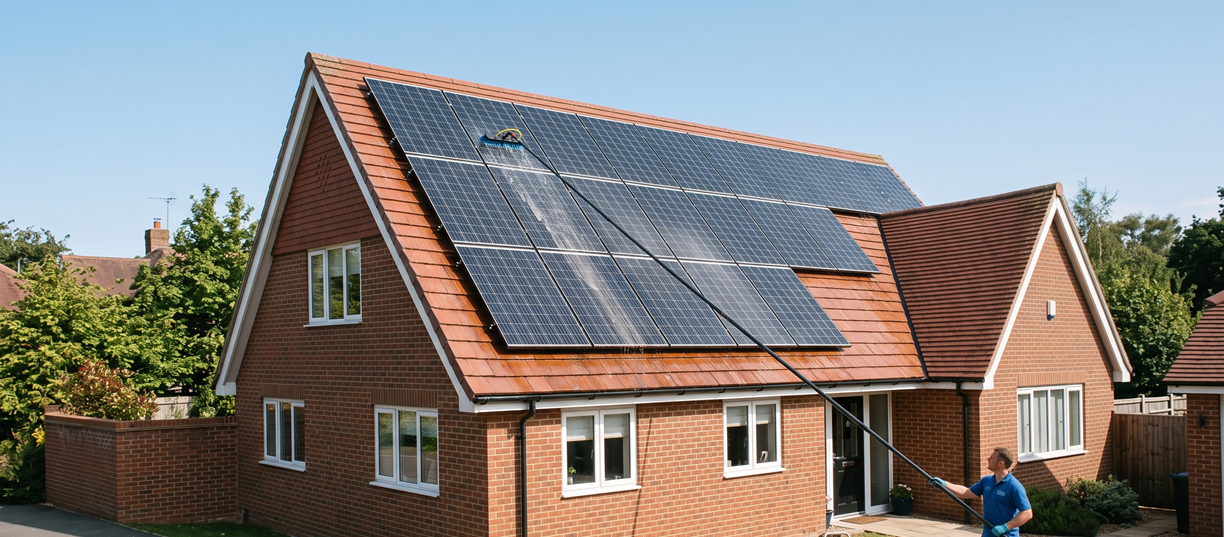
For ground-level work to clean solar panels, the recommended equipment includes:
- Telescopic water-fed pole: allows safe reach across the array without climbing onto the roof.
- Soft-bristle brush head: loosens dirt without scratching the anti-reflective coating.
- Deionised or filtered water: prevents limescale streaks that standard tap water leaves behind.
What to Avoid When Cleaning Solar Panels
Certain tools and techniques cause lasting panel damage and void manufacturer warranties. The following should always be avoided:
- Pressure washers: high-pressure jets force water past EPDM seals and damage internal wiring.
- Abrasive materials: steel wool, scourers, and stiff brushes scratch the anti-reflective glass coating and permanently reduce light absorption.
- Household detergents or washing-up liquid: these leave a sticky surfactant residue that actively attracts more dirt.
- Cleaning in direct, hot sunlight: rapid temperature change causes thermal shock and micro-cracks in the glass.
- Standing or walking on the modules: panels are not built to support human weight and will crack under pressure.
PV Panel Maintenance Essentials and Servicing
A ground-level solar panel check every few months for physical damage, loose wiring, or new shading from overgrown foliage covers the basic physical requirements. Monitoring energy output through the inverter display or a connected app is equally important.
For technical upkeep, a professional photovoltaic maintenance visit every three to five years is recommended. During this visit, an accredited technician performs electrical testing on the inverter, inspects the mounting hardware for wear, and investigates any system error codes. Inverters typically need replacing every 10 to 15 years.
The solar panel servicing costs homeowners can expect vary depending on property type, panel count, and roof accessibility. The table below outlines typical professional cleaning costs and maintenance frequencies:
- Professional cleaning: £80 - £200 (Recommended every 18 - 24 months)
- Full technical inspection: £140 - £250 (Recommended every 3 - 5 years)
- Bundled maintenance contract: Varies by provider (Ongoing, scheduled frequency)
Solar Panel Bird Proofing and Protection
Concentrated bird droppings build up quickly, and if left in place during sunny periods, the resulting shading creates hot spots that raise cell temperature and cause permanent degradation. Nesting activity underneath the array can also damage wiring and trap moisture against the roof.
Effective pest prevention measures reduce these risks:
- Bird-spike strips: installed near common perching points to deter roosting.
- Mesh or chicken wire barriers: secured along panel edges to block access to the underside of the array. (Trade installers can source suitable galvanised wire and solar PV installation accessories to complete the job).
- Clearing surrounding debris: removing twigs and nesting material from the roof discourages repeat visits.
Next Steps for Homeowners
- Check your dedicated inverter app today to track current energy output against the estimated generation figures on your original MCS certificate.
- If you notice a sudden drop in generation, conduct a ground-level visual inspection for heavy dirt build-up, bird droppings, or new shading.
- Contact a local, MCS-registered technician to book a full electrical inspection if your system has not been professionally serviced in the last five years.
Help & Feedback
 Chat With Us
 Give Us Feedback