


Favourites

Account

Basket
VAT:
Ex
Inc


 45 years of trusted expertise
A central heating power flush is a professional deep-clean that forces water and specialist cleaning chemicals through a boiler, pipework and radiators at high velocity to strip out sludge, rust and other debris. It restores even heat distribution, helps protect the boiler from premature wear, and is usually carried out by a Gas Safe registered heating engineer rather than as a DIY job. This guide explains exactly how the process works, the warning signs that point to a blocked system, and what a professional flush typically costs and takes to complete.
If your radiators are slow to warm up, your boiler has started making odd noises, or your energy bills have crept up without explanation, a blocked central heating system could well be the cause. This article walks trade professionals and homeowners alike through what a power flush actually involves, the tell-tale symptoms that signal it's needed, and how it compares with chemical flushing and MagnaCleanse. You'll also find clear guidance on cost, timescales and how to find a properly qualified engineer.
What is a Power Flush and How Foes it Work
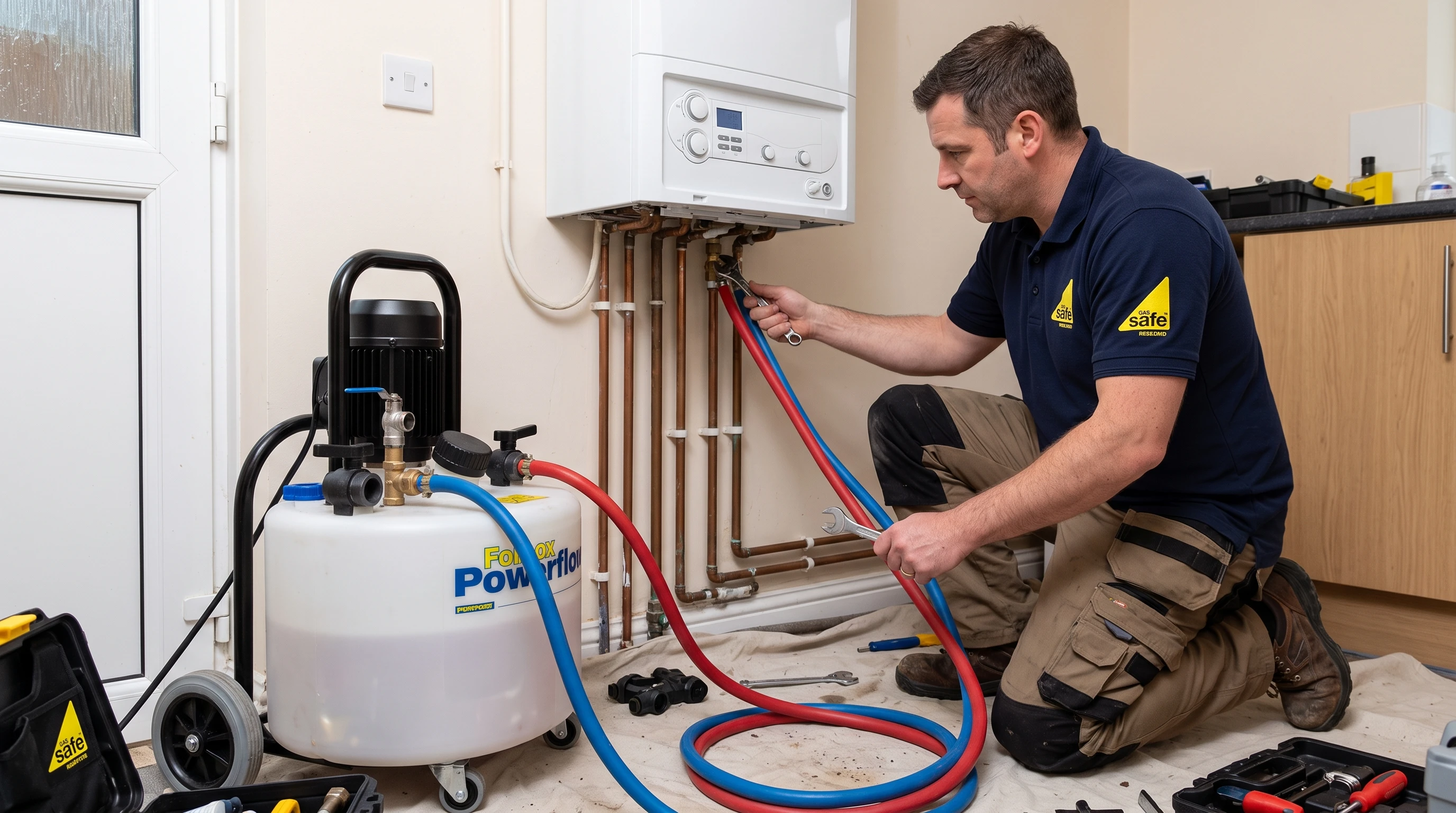
A power flush is a professional deep-clean for a central heating system, designed to remove the black sludge, rust and general debris that builds up inside boilers, pipework and radiators over years of use. Rather than relying on the system's own circulation pump, an engineer connects a dedicated power flushing machine directly to the pipework, allowing water to move far more forcefully than normal running of the heating ever could.
During the process, the central heating flusher circulates a powerful cleansing chemical through the system at high flow but comparatively low pressure, so it can dislodge stubborn magnetite sludge without putting undue stress on ageing pipework or joints. Once the cleanser has broken down the deposits, clean water is pushed through the system to carry the loosened debris away to a suitable drain, and the cycle is repeated until the wastewater runs clear.
What sets powerflushing apart from routine maintenance, such as bleeding a single radiator, is both the scale and intensity of the clean. The whole system, boiler, pipework and every radiator, is treated as one unit rather than in isolation. Key equipment typically includes:
- Power flushing pump: a high-flow unit that circulates water and chemicals at speed through every part of the system.
- Cleansing chemical: a specialist descaling agent that breaks down sludge, rust and limescale deposits.
- Corrosion inhibitor: dosed at the end of the flush to protect metal components against future build-up.
- Agitator or magnetic filter: used to loosen stubborn deposits inside radiators and capture metallic debris.
Signs Your Central Heating System Needs a Power Flush
Sludge builds up gradually over years of use. If your heating is underperforming, look for these specific physical indicators:
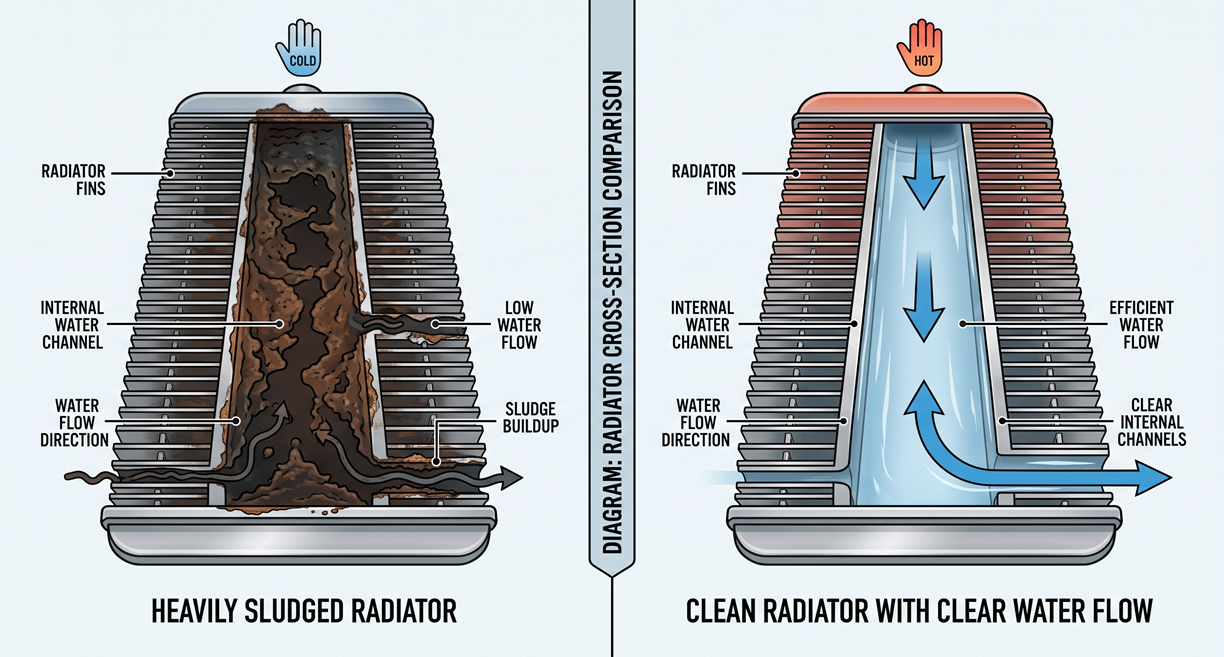
- Radiator cold bottom: The top of the radiator feels hot, but the base is noticeably cooler. This indicates settled iron sludge.
- Slow heating: Specific radiators take significantly longer to reach temperature compared to the rest of the property.
- Discoloured bleed water: Brown or black water when bleeding a radiator suggests internal corrosion is actively taking place.
- Boiler noise: Kettling, banging, or gurgling sounds from the boiler often mean debris is restricting flow through the heat exchanger.
Radiator Power Flushing Process Step by Step
A professional power flush follows a defined sequence designed to clean every part of the system thoroughly rather than treating individual radiators in isolation. Here's how radiator power flushing and wider central heating system cleaning typically unfolds:
- Assessment and isolation: the engineer checks radiator temperatures, records valve settings, and isolates the system electrically and from the cold water supply before starting.
- Connecting the machine: the power flushing unit is connected in place of the circulation pump, or across a radiator's tails if the pump can't be bypassed.
- Primary chemical flush: a cleansing chemical is circulated through the whole system, with the flow direction reversed periodically to help loosen sludge from pipe walls.
- Individual radiator flush: each radiator is isolated and flushed on its own, sometimes with an agitator tool used to dislodge particularly stubborn deposits.
- Final clean-water rinse: fresh water is flushed through until the wastewater leaving the system runs clear, at which point the contaminated water is disposed of via a suitable drain.
- Inhibitor dosing: a corrosion inhibitor is added to protect the system, valves are returned to their original settings, and radiator temperatures are rechecked to confirm the improvement.
Power Flush Cost and How Long Does a Power Flush Take
The cost of powerflush work in the UK depends mainly on the size of the property, the number of radiators, and how contaminated the system is. Checkatrade reports that a typical power flush costs somewhere between roughly £350 and £800, with pricing scaling up alongside property size and radiator count. Separate UK trade quote data from MyJobQuote puts the average heating system flush cost at around £400 for a smaller home.
Flat or small terrace (up to 6 radiators): The typical cost guide is at the lower end of the range, and the typical duration is around half a day.
- Average 3-bed semi: The typical cost guide is mid-range, and the typical duration is around a day.
- Larger detached home (10+ radiators): The typical cost guide is at the upper end of the range, and the typical duration is up to two days.
On timescales, MyJobQuote notes that most jobs are completed within four to eight hours Larger properties or heavily sludged systems can take considerably longer, with Boiler Central pointing out that particularly contaminated systems or those needing component replacement can stretch the job to as much as two full days. A combi or sealed-system boiler often flushes faster than an older open-vented setup, simply because there's no need to cap off the expansion pipework first.
Power Flush vs Chemical Flush vs MagnaCleanse
Depending on the severity of the blockage, a heating engineer will recommend a specific cleaning method.
- Power flush: The mechanism uses a high-flow pump to force chemicals through the system under pressure, and it is best suited to heavily sludged or long-neglected systems.
- Chemical flush: A cleaning agent is circulated by the system's own internal pump, and it is best suited to light build-up or routine maintenance.
- MagnaCleanse: This is a chemical flush combined with a magnetic filter to trap iron sludge, and it is best suited to systems with high magnetite contamination.
Benefits and Risks of Power Flushing Your Heating System
A successful power flush brings noticeable improvements to how a heating system performs, though it isn't entirely without risk on older installations. Once sludge and debris are cleared, radiators heat up faster and more evenly, boiler noise reduces, and the whole system runs more efficiently because water can circulate freely rather than fighting through blockages. That's also why many households notice a drop in energy usage after a flush, since the boiler no longer has to work as hard to achieve the same heat output.
- Faster, more even heating: cold spots disappear as water flow is restored throughout the radiator.
- Improve heating efficiency: a cleaner system loses less energy overcoming blockages, supporting lower running costs.
- Extended equipment lifespan: removing corrosive sludge reduces wear on the pump, valves and heat exchanger.
- Fewer breakdowns: clearing debris lowers the risk of the boiler cutting out or overheating.
The main risk applies to older or already-weakened systems: because a power flushing service moves water at high speed, it can occasionally expose a leak at a joint or radiator that was previously masked by sludge sitting in place. This isn't usually caused by the flush itself but rather revealed by it, and having the engineer on hand to fix any exposed leak immediately is one of the strongest arguments for using a professional power flushing UK firm. Following recognised industry guidance for treating and maintaining heating system water, such as BS 7593, also helps ensure the work is carried out safely and to a consistent standard.
Frequently asked questions about power flushing
- How often should you power flush your system? A well-maintained system generally only needs a power flush every five to six years, according to Checkatrade, though this can vary with water hardness and pipework age.
- Can you power flush a combi boiler? Yes. Both combi and system boilers can be power flushed, and doing so before fitting a brand-new boiler onto an old system is strongly recommended to prevent contamination.
- Will a power flush fix a broken boiler? No. If your boiler not working is down to a failed pump, valve or PCB, a flush won't repair those parts — it clears blockages and sludge, but mechanical faults still need a separate repair.
- Is the process messy? Not when carried out properly. A professional engineer uses dust sheets, hoses and a self-contained pump unit, and disposes of contaminated water via a suitable outside drain, leaving no lasting mess behind.